

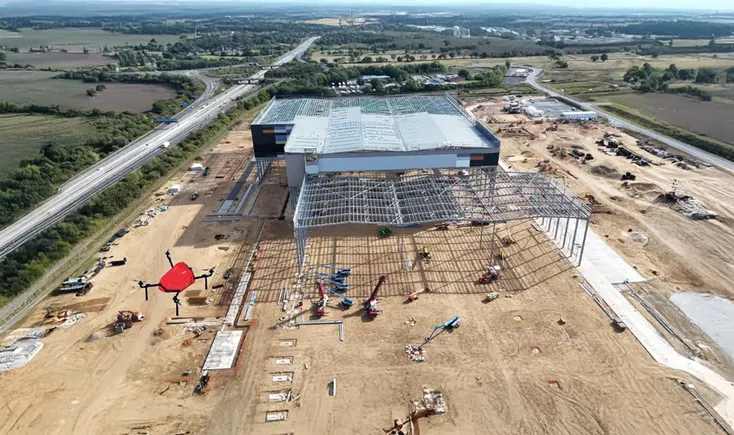
Ask contractors and builders about the use of drones on construction sites and many will give the same answer: drones would be nice to have, but often difficult to understand. Which Drone Platform Should You Buy? How many do you need? What certifications and authorizations are required? These questions are just the tip of the iceberg when it comes to building a drone program. Pilots need to be hired and trained, aircraft need regular maintenance, and each new sensor or camera needs to be checked for compatibility. For companies looking to get ahead, the closer you look at drone ownership, the more complicated the picture becomes.
A new report from the Associated Builders and Contractors provides numbers on this topic: According to its May 2026 Drone Use Survey, approximately 36% of members fly drones. When asked what is holding back adoption, respondents cited regulatory and compliance issues first, followed by training and staffing, as well as a limited range of use cases. Taken together, the findings describe an industry that sees the value of aerial data but is struggling with the cost, complexity and risk of owning the tools that produce it.
The limits of DIY drone programs
Over the past year, the rules surrounding commercial drones have changed faster than most contractors can keep track of.
In December 2025, the Federal Communications Commission added new foreign-made drones and critical components to its covered listmeaning that new models from these manufacturers can no longer be authorized for sale in the US. Existing aircraft are still legal to fly, but the ABC survey found that almost all contractor fleets rely on a single foreign manufacturer. In July, the FCC went further, proposing that stop the importation and marketing of various categories of foreign equipment had already approved, including thermal and LiDAR compatible systems. These are the same payloads used by contractors for mapping and inspections.
For companies working on federally funded projects, the US Security Drone Act already prohibits the use of drones from covered foreign manufacturers, and that restriction extends to third-party drone services.
Owning a fleet now comes with a kind of risk that most contractors never signed up for. Aircraft and sensors purchased today could be more difficult to replace, repair or use in certain projects tomorrow.
Why the drone alone doesn’t cut it
Even without the many regulatory challenges to drone adoption in the US, there is a big difference between owning a drone and running a program that produces the data that decision makers need.
Topography degree of topographystore volumes and documentation as constructed accurate enough to resolve a paid application conflict require RTK or PPK positioning, LiDAR or photogrammetry payloads, processing software, and trained people who know how to plan flights and turn raw imagery into useful products.
Building this internal capability means certified Part 107 pilots, insurance, regular maintenance, airspace clearances and data processing expertise. It also means staffing, at a time when the industry is already struggling to find new workers to keep up with demand.
Contractors regularly rent equipment. Why not drones?
Drone as a Service provides construction companies with on-demand, pay-as-you-go or subscription drone solutions, including surveying, 3D site mapping, progress monitoring and inspection services. The company offers licensed pilots, FAA-registered drones, regulatory approvals and data management services. Customers receive finished products, including orthomosaics, terrain models, volumetric reports and inspection images, ready to incorporate into their CAD, GIS and project management workflows.
Because Drone as a Service owns the hardware, regulatory changes become their problem to manage, not the contractor’s. If the rules change about which aircraft or sensors can be used, a customer’s project doesn’t stop and their capital isn’t tied up in equipment they can no longer trust.
What Drone as a Service can do for construction projects
With Drone as a Service, a general contractor can order a pre-construction survey, schedule monthly progress flights through vertical construction, and capture final as-built conditions at closeout. A developer can document multiple sites with a consistent schedule, and a specialty contractor can commission a roof or facade inspection as needed. Drone technology eliminates major risks for contractors while reducing costs, and construction crews get the aerial data that keeps projects on schedule, on budget, and well documented.
To learn how drones can help improve your business with faster, more cost-effective and safer solutions, visit droneasaservice.com.
