

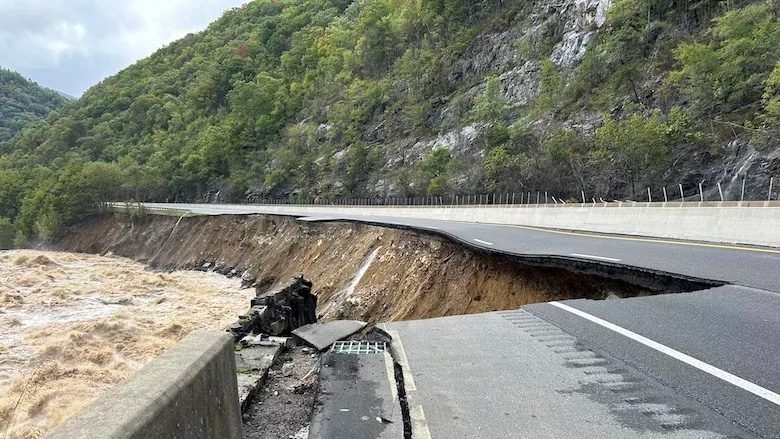

It is well known that much of the country’s critical infrastructure is in urgent need of repair. According to the American Society of Civil Engineers, roads and traffic across the US are in poor condition, the result of poor maintenance and deferred maintenance. More than 40,000 bridges, for example, are considered “structurally deficient,” but motorists cross them roughly 171.5 million times a day, according to ASCE.
A report released by the National Institute of Standards and Technology this fall aims to help communities identify which projects to prioritize to keep people safe when earthquakes and other disasters strike, at a time when funding is limited and extreme weather events are increasingly costly and destructive.
NIST officials say the report provides a first-class framework for states, urban planning officials and the consultants who work with them to make decisions about which projects should be designed to the highest standards and be able to function effectively under a variety of scenarios.
According to NIST, the report supports and reflects the current administration’s interest in moving disaster preparedness and resilience planning to states and localities. Sissy Nikolaou, leader of NIST’s earthquake engineering group, said in a Sept. 29 email that the report “shows [a] new philosophy and framework on how to connect financial decisions with engineering assessments at the system and asset level.”
While the report, Transportation Risk-Recovery Investment: Planning Solutions Optimizing Earthquake Resilience and Functional Recovery of Highways (TRIP$), focuses specifically on seismic hazards and the transportation sector: roads, railways, aviation, ports, inland waterways and transit, the approach is modular in that it can be applied to other types of plant infrastructure and water transmission plants and transmission plants. buildings, and also incorporates multiple hazards, such as floods and wildfires.
“It’s a document that talks about the framework for thinking about how to make investments based on a community’s vulnerabilities,” says Jennifer Goupil, ASCE’s director of resilience and managing director of the Structural Engineering Institute.
Maria Lehman, U.S. infrastructure market leader for GHD and ASCE past president, says the report helps communities identify which projects need to be functional as soon as possible after extreme events. When a disaster like a wildfire strikes, some roads or bridges are more critical to public safety and health than others. “You want to get the column up as fast as possible … so you can get some people to back up online instead of waiting until you get everything fixed,” Leman says.
And while certain facilities must be built with the highest level of resilience, others are less critical, he adds. If communities have the funds, they can repair and design infrastructure to be resilient enough to be functional in multiple scenarios, and if they don’t have the funds, the framework outlined in the report helps communities identify which assets to invest in first, Lehman says.
Nikolaou and the other authors of the report say that future studies will explore the impacts of cascading scenarios, such as flood-earthquake or fire sequences after an earthquake. “These extensions will improve the framework’s applicability to real-world composite events and strengthen its value to various resilience planning efforts, contributing to the overall goal of providing methodologies and tools that support the long-term resilience of US infrastructure.”
