


Water industry and groups praised the U.S. House’s overwhelming passage of the Water Resources Development Act (WRDA) last week and urged a bipartisan effort in both chambers to finalize water infrastructure legislation this session.
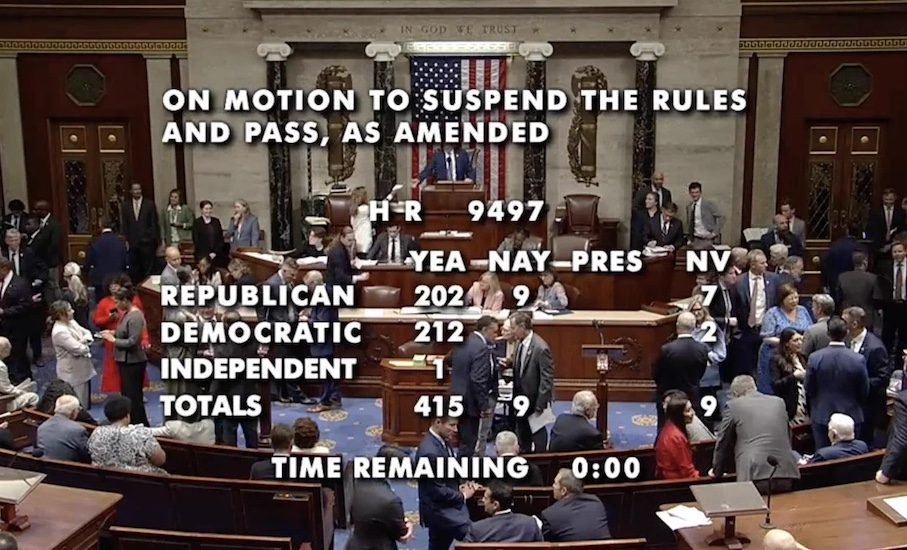
Biennial legislation authorizing flood risk management, navigation and ecosystem restoration projects for the US Army Corps of Engineers passed House lawmakers on Sept. 16 by a remarkable 415-9 vote. In July, the US Senate Environment and Public Works Committee unanimously advanced its own WRDA legislation to the full Senate, where it is still awaiting a full vote.
Before legislation can be sent for presidential consideration, the House and Senate would have to reconcile differences between their bills.
There is strong bipartisan support in both chambers to reconcile the two bills, Charlotte Mitchell Duyshart, associate legislative director of the National Association of Counties, told ENR.
“I’ve had a lot of meetings with congressional staff … in the last few weeks, and it seems like the enthusiasm is there on both sides,” he said. Conference negotiations for the House-passed bill and the Senate committee version appear to be underway, he said.
“The WRDA is historically a very bipartisan thing that everybody wants to do because everybody has an Army Corps project in their district or states that they want funding for a new feasibility study,” Duyshart said.
A WRDA bill is likely to be one of the few items Congress passes in the lame-duck session, but it could be attached to other legislation such as the defense authorization or appropriations bills, he said.
Looking for quick answers on construction and engineering topics?
Try Ask ENR, our new intelligent AI search tool.
Ask ENR →
The House bill would authorize 133 new feasibility studies for locally proposed water resource infrastructure projects and 14 projects already approved by the Corps and ready for Congress to authorize construction. The legislation would include policy changes aimed at improving the delivery of water infrastructure projects, such as reauthorized alternative project delivery programs, and emphasizes input from non-federal interests for feasibility studies.
The House Transportation and Infrastructure Committee said the bill includes policies that will improve the ability of non-federal interests to obtain valuable technical assistance and fund construction more quickly, as well as to encourage the Corps to increase its use of multi-year contracts.
“WRDA 2026 makes significant nationwide improvements to our inland waterways, harbors and ports, flood protection, and other critical water infrastructure,” said Committee Chairman Sam Graves (R-MO). “This bill also makes common sense reforms to Army Corps of Engineers policies, empowers local communities, and accelerates project delivery.”
The Senate bill authorizes 61 feasibility studies and 15 new or modified construction projects nationwide, as well as U.S. Environmental Protection Agency drinking water and wastewater infrastructure programs, including state revolving funds (SRF) and increased authorized funding levels.
The biggest differences between the bills is the Senate’s inclusion of the reauthorization of the SRF program, which is absent from the House version, Duyshart said. The SRF program is important because it provides below-market financing for water infrastructure projects, which is especially critical for smaller, rural counties that struggle to raise revenue, he said.
Although the Jobs and Infrastructure Investments Act (IIJA) provides supplemental and advanced credits for SRF programs, the IIJA expires on September 30. SRF programs need reauthorization so their federal funding doesn’t run out, he said.
“We expect to see the SRF numbers in a final version of the WRDA bill, however, [it ultimately] comes together,” Duyshart said.
Several groups, including the National Utility Contractors Association (NUCA), favor the more comprehensive Senate bill over the House legislation.
The group is urging the House to reconcile its bill with the Senate version, which would extend critical SRFs for four years and increase resources. The Senate bill would also support mainline replacement and PFAS removal, as well as investing in workforce development, cybersecurity, resiliency and other infrastructure improvements, said Zack Perconti, NUCA vice president and director of advocacy.
“During the upcoming lame duck session, NUCA will continue to urge Congress to pass comprehensive water infrastructure legislation that addresses the many unmet demands to improve the nation’s waterways, drinking water and wastewater infrastructure,” he said in a statement.
