
Close Menu
Machinery Asia
  • Home
  • Industry News
  • Heavy Machinery
  • Backhoe Loader
  • Excavators
  • Skid Steer
  • Videos
  • Shopping
Facebook X (Twitter) Instagram
Machinery Asia
Subscribe
  • Home
  • Industry News
  • Heavy Machinery
  • Backhoe Loader
  • Excavators
  • Skid Steer
  • Videos
  • Shopping
Machinery Asia
You are at:Home » WVU researchers are studying lower-grade hardwoods as alternative building materials
Industry News

WVU researchers are studying lower-grade hardwoods as alternative building materials

Machinery AsiaBy Machinery AsiaJune 13, 2023No Comments3 Mins Read
Facebook Twitter Pinterest LinkedIn Tumblr Email
Share
Facebook Twitter LinkedIn Pinterest Email Tumblr

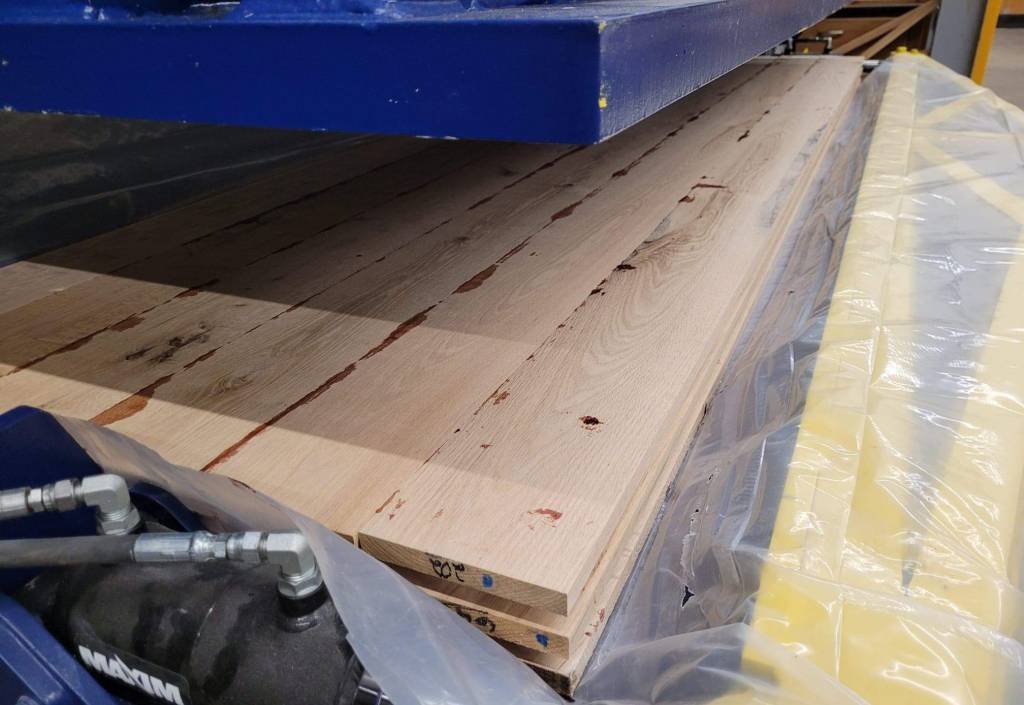
A wood panel is produced at West Virginia University as part of research by Joseph McNeel and his team at the WVU Davis College of Agriculture, Natural Resources and Design.
A wood panel is produced at West Virginia University as part of research by Joseph McNeel and his team at the WVU Davis College of Agriculture, Natural Resources and Design. Photos courtesy of Joseph McNeel, West Virginia University.

Research by West Virginia University (WVU) professor Joseph McNeel and his colleagues suggests that certain lower-grade hardwoods, such as yellow poplar, may be an affordable and sustainable alternative to materials traditional construction materials such as soft wood, steel and concrete.

According to WVU Today investigative writer Laura Roberts, who interviewed Joseph McNeel, the director of the WVU Appalachian Hardwood Center, housed in the WVU Davis College of Agriculture, Natural Resources and Design, has been studying the feasibility of yellow poplar, an abundant West Virginia. species, as an engineered wood construction material. Yellow poplar is well suited for construction due to its straight growth, small limbs and ease of processing.

While traditional wood consists of a single piece, a durable and sturdy product can be created by gluing and pressing several pieces together in layers. These layered panels, known as cross-laminated timber (CLT), are typically made from softwoods such as spruce, fir and pine. However, McNeel’s research indicates that certain Appalachian hardwoods, such as yellow poplar, can also be used effectively in structural applications.

In the lab, McNeel and his team have developed panels with three, five and seven layers using a press that exerts significant pressure. They performed tests to assess the bending and breaking strength of the panels and exposed samples to harsh conditions such as water saturation and dehydration. The results indicated that the panels performed well and could be suitable for construction.

The next step is to get yellow poplar accepted as an acceptable raw material by the American Panel Association (APA). Once approved, CLT manufacturing companies will be able to incorporate yellow poplar CLT into commercial construction projects. This development not only benefits the construction industry, but also forest products companies in the Appalachian region that currently use hardwood in low-value items.

Speaking with WVU Today, McNeel said the successful implementation of CLTs depends on the region’s ability to produce them, as the panels are difficult to transport due to their weight. He emphasized the importance of hardwood manufacturing facilities being close to the market to minimize costs.
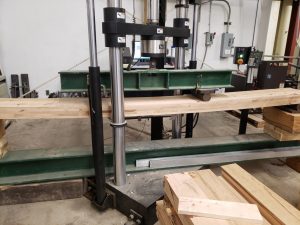
A panel segment is subjected to breaking and bending tests at the WVU Appalachian Hardwood Center, housed in the Davis College of Agriculture, Natural Resources and Design. Courtesy photo

McNeel and his team are also exploring the use of red oak, another Appalachian hardwood, in the construction of wooden mats. These mats are wooden structures used to support heavy-duty equipment in sensitive locations prone to rapid soil degradation, such as wetlands. Red oak is very durable and can withstand harsh weather conditions, making it ideal for these applications.

McNeel’s research team consists of Curt Hassler, research professor; Balazs Bencsik, postdoctoral candidate; Jon Norris, master’s candidate; and Levente Denes, associate professor in WVU’s Wood Science and Technology Program.

Source link

Share. Facebook Twitter Pinterest LinkedIn Tumblr Email
Previous ArticleStainless Steel 304 Thickening Hinge Loop for Heavy Industrial Machinery Hardware Equipment Door Hinge 1Pcs (Color : A004)
Next Article Hello, World! Cars and Trucks
Machinery Asia
  • Website

Related Posts

Amtrak disputes MTA over Penn Station access delay, calls for retraction

November 18, 2025

DOTs paused DBE targets to recertify companies

November 18, 2025

Bedrock Robotic Excavators Remove 65,000 Tons of Dirt at Southwest Project

November 18, 2025
Leave A Reply Cancel Reply

  • Facebook
  • Twitter
  • Instagram
  • Pinterest
Don't Miss

Amtrak disputes MTA over Penn Station access delay, calls for retraction

DOTs paused DBE targets to recertify companies

Bedrock Robotic Excavators Remove 65,000 Tons of Dirt at Southwest Project

Las Vegas MGM Grand completes $300 million remodel

Popular Posts

Amtrak disputes MTA over Penn Station access delay, calls for retraction

November 18, 2025

DOTs paused DBE targets to recertify companies

November 18, 2025

Bedrock Robotic Excavators Remove 65,000 Tons of Dirt at Southwest Project

November 18, 2025

Las Vegas MGM Grand completes $300 million remodel

November 18, 2025
Heavy Machinery

Where can I find reliable mini excavator dealers near me?

October 27, 2025

The complete expert guide to faster and smarter cargo transportation

October 27, 2025

Understand the weight of aluminum car trailers

October 20, 2025

The difference in dimensions between a Lowboy and RGN trailer

October 15, 2025

Subscribe to Updates

Get the latest creative news from FooBar about art, design and business.

Type above and press Enter to search. Press Esc to cancel.