

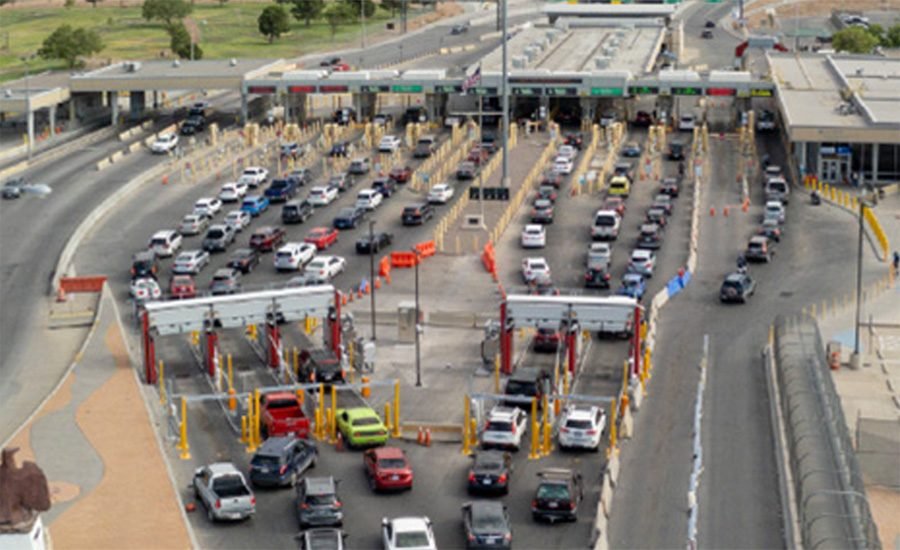
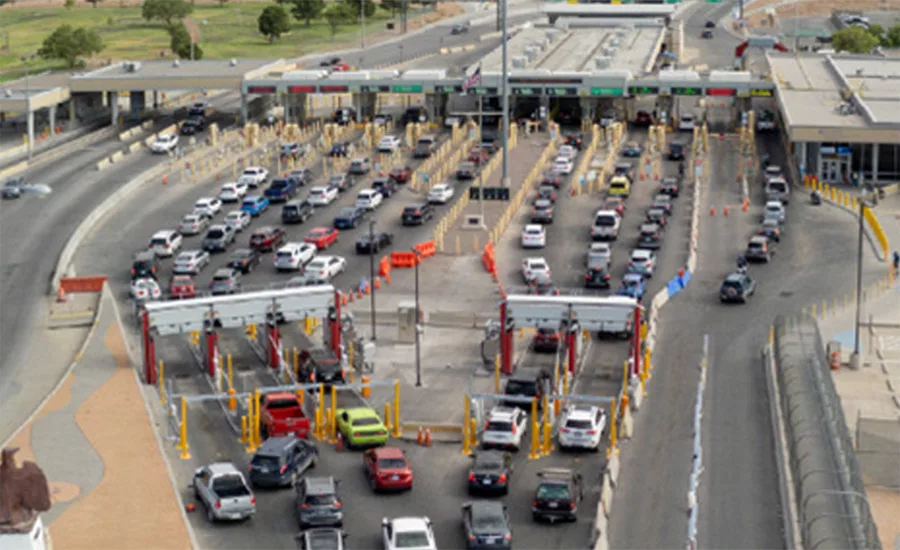
On June 9, the US House of Representatives passed legislation extending billions of dollars in funding for border inspection, surveillance and control programs through 2029, including technology deployments that already require modifications to roads, utility facilities, command centers and other civil works at US ports of entry.
The Secure America Act passed 214-212 after passing the Senate and is now headed to President Donald Trump’s desk.
While the debate focused on immigration enforcement and deportation, the bill also allocates $3.45 billion for border security technology programs tied to an ongoing US Customs and Border Protection modernization effort, which requires 434 large-scale inspection systems across the country.
At the heart of this funding is a provision directing CBP to acquire and integrate new non-intrusive inspection equipment and “associated civil works” to help combat narcotics trafficking at ports of entry and along the Southwest, Northern and Maritime borders.
The legislation also funds border surveillance technology, biometric entry and exit systems, air and sea operations improvements, and related security initiatives through fiscal 2029.
The legislation also provides $31.1 billion for ICE activities through 2029, including funding for facility maintenance and upkeep, fleet maintenance and upkeep, information technology systems, and operational support.
House Appropriations Committee Chairman Jodey Arrington (R-Texas), the lead architect of the legislation, said after the passage that the measure provides border agencies with long-term funding security.
Looking for quick answers on construction and engineering topics?
Try Ask ENR, our new intelligent AI search tool.
Ask ENR →
“The Secure America Act is headed to President Trump’s desk, and our brave men and women … finally have the funding and security they need to do their jobs,” Arrington said in a statement.
The legislation does not specifically call for money to build new border walls, new ports of entry or large stand-alone construction programs, but federal oversight documents show that the inspection technologies funded under the bill have substantial physical infrastructure requirements.
The deployment of technology entails infrastructure demands
According to a September 2025 Government Accountability Office review, CBP’s deployment process for large-scale non-intrusive inspection systems includes site planning, civil works design, construction, installation and equipment testing.
Preparatory work may include placing concrete, installing electrical conduits, and other necessary support infrastructure before the scanning equipment can be deployed.
GAO found that some ports of entry require more extensive modifications, such as image review command centers, power connections, data connections, traffic flow redesign, and other site upgrades.
A Congressional Budget Office analysis of previous legislation expanding non-intrusive inspection programs similarly found that many land ports of entry would require capital improvements, including road work and new facilities, before full-scale scanning systems could be installed. CBO estimated that these improvements would cost approximately $98 million.
RELATED
Hensel Phelps wins $275 million GSA contract for Arizona border station
The inspection program faces cost and space limitations
The bill’s technology funding builds on a CBP inspection program that has received more than $2 billion since 2019 to deploy additional scanning systems at land ports of entry. The systems allow passenger vehicles, commercial trucks and rail traffic to be screened for narcotics and other contraband without requiring manual inspections.
This rollout effort is already underway at major intersections in the Southwest, including Calexico East and Otay Mesa in California; Nogales and San Luis in Arizona; Santa Teresa in New Mexico; and El Paso, Laredo, Hidalgo, Pharr, Brownsville, Eagle Pass and Ysleta in Texas.
The physical requirements of the program have also become a major cost factor. GAO found that deployment expenditures have exceeded original estimates due to construction challenges, site-specific conditions, and infrastructure needs.
Installation costs for some commercial vehicle scanning systems have increased from initial estimates of about $1.3 million per system to more than $4 million, and some future installations are expected to cost substantially more.
The report also identified ongoing infrastructure challenges at some of the country’s busiest intersections. San Ysidro and Otay Mesa, California, and the DeConcini crossing in Nogales, Arizona, represent some of the highest volumes of passenger vehicles at the southern border, but CBP has not yet determined how to overcome the space constraints that make it difficult to install large-scale scanning systems.
Democrats uniformly opposed the measure. House Minority Leader Hakeem Jeffries (DN.Y.) said the legislation would “waste $70 billion in taxpayer money to give ICE a blank check with no protections, no oversight, no accountability.”
The scale of the effort remains substantial. By February 2025, CBP had deployed 52 of 153 planned large-scale inspection systems, according to GAO, while 101 remained in planning, design or construction.
