

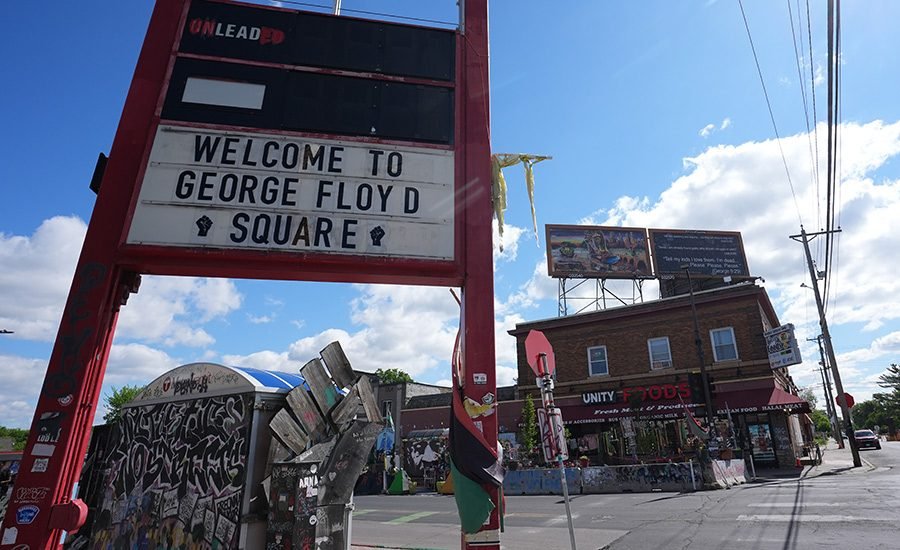
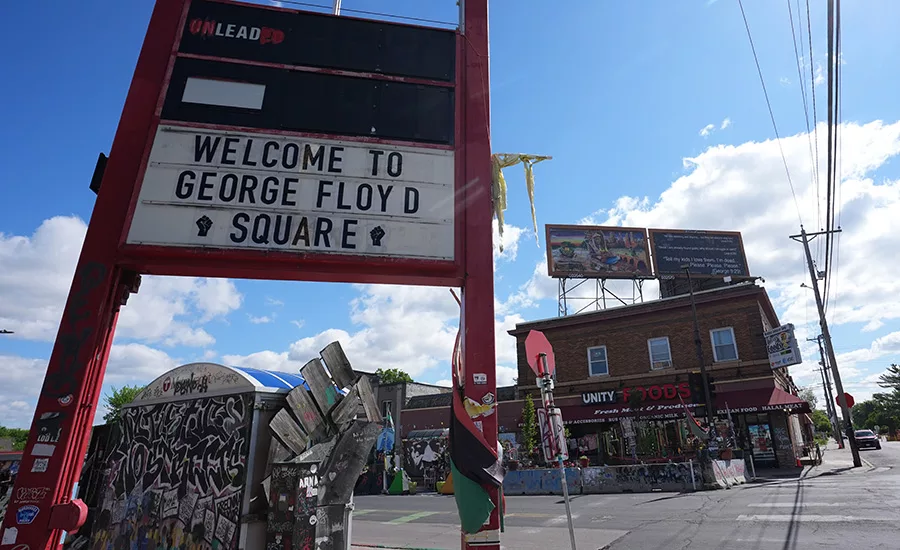
The first phase of street reconstruction at George Perry Floyd Square in south Minneapolis, where George Floyd was killed by a Minneapolis police officer in 2020, sparked a global movement calling for racial justice and police reform, began June 8 in south Minneapolis, part of a $323 million global city capital plan by 2026.
Renovating the 38th Street and Chicago Avenue plaza, renamed in 2022, is estimated to cost $15.1 million, including approximately $9.5 million in construction costs and $5.6 million for planning, outreach and engineering. The works are done by the city teams.
The first phase consists of the replacement of underground services. The comprehensive plan calls for reconstruction of the entire public roadway, new sidewalks, new ADA pedestrian ramps, tree-lined boulevards, green stormwater infrastructure, new bike lanes for all ages and abilities, traffic calming elements, sidewalk, curb and gutter replacements and pedestrian-scale street lighting.
The plans also call for the return of transit service to the plaza, however when the square is completely renovated, No vehicles will be allowed to pass through the space where Floyd was killed. Existing monuments and art will be housed there.
“This will add green space, add lighting, improve the street, while enhancing and maintaining the arts and monuments area, especially the site where George Floyd was killed,” Minneapolis Public Works Director Tim Sexton said when the project was unveiled.
Additionally, the city is in its third year of replacing lead water pipes throughout the city, some of which will be replaced near the plaza. “This year we will replace more than 1,800 private lead service lines in neighborhoods across the city, including properties along George Floyd Square,” said Annika Bankston, director of the water treatment and distribution division of the city’s public works department.
The city had considered turning the square into a pedestrian mall but ultimately settled on the current plan, which they call a flexible open option. The city sought community input as the plan was developed.
“Thousands of voices shaped this plan, and today we have turned years of work into real progress,” Mayor Jacob Frey said in a December 2025 press release after the plan was approved by the city council. “Approving the flexible opening option means we can finally move forward together.”
Other major projects in the capital plan include repaving 20 miles of streets and replacing and repairing structural elements of the Nicollet Avenue Bridge built in 1923 and rebuilding the century-old 10th Avenue Bridge. Both bridges span the Midtown Greenway, a multi-use path that provides a vehicle-free route for cyclists and pedestrians through South Minneapolis. Kraemer North America is the contractor for both bridge projects.
Another major project completed at Minneapolis 2025 involved the replacement of 700 lampposts damaged by thieves stealing copper wire. The new lights use aluminum, not copper.
