

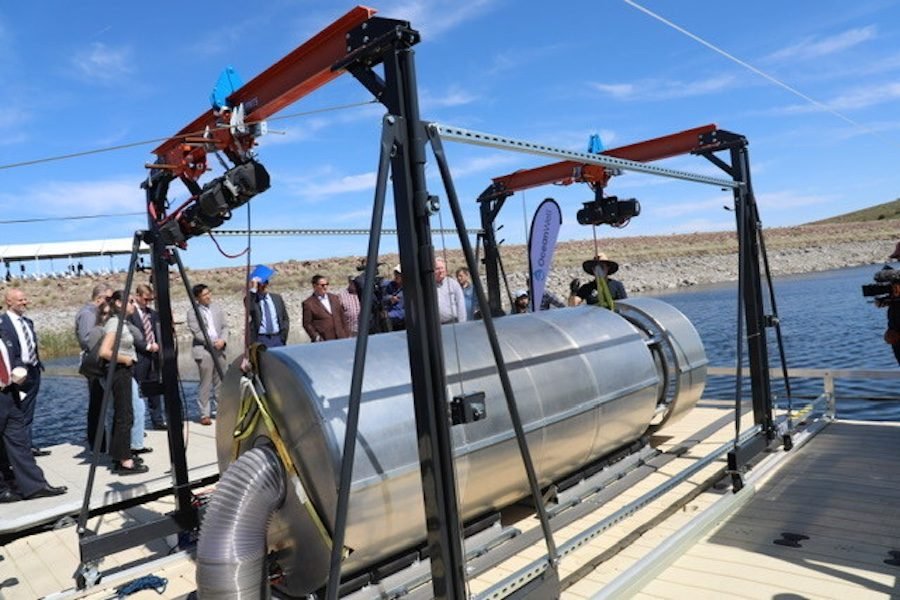
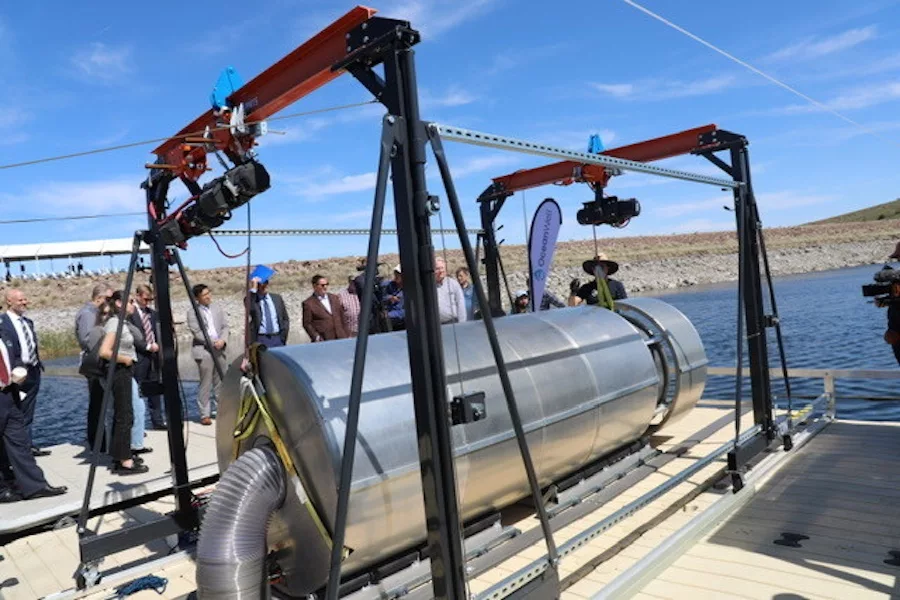
Los Angeles-area water agencies were hit hard in 2022 by back-to-back years of drought and an unprecedented low allocation from the state water project, but none were hit harder than the Las Virgenes Municipal Water District, which serves about 70,000 users in an upscale section of the city with virtually no other supply alternatives, in-state or out-of-state. The severe limit on water use per person prompted officials to come up with a plan to create a new supply through a new ocean desalination process.
“We cannot be idle to repeat 2022 when our water supply from [the Metropolitan Water District of Southern California] it was reduced by 74%. It wasn’t an anomaly,” says David W. Pedersen, the water district’s general manager. But land-based desalination used elsewhere in California is energy-intensive and can cause environmental damage, prompting him and other officials to hook up with developer OceanWell to test its approach offshore, using cylindrical “pods” placed as deep as 1,400 feet to pump water from the ocean and feed the ocean pressure drinking fresh water through reverse osmosis Las Virgenes completed pod tests in a municipal reservoir in late 2025.
The three-month pilot “exceeded expectations,” says Mark Golay, OceanWell’s director of engineering projects, noting that it “helped us demonstrate” that the underwater reverse osmosis process “is a practical and economical way to reduce the cost, energy and environmental impact of water treatment applications.” He says the tested pod had 85% recoverable flows during the study period and 93% operational efficiency. Pedersen adds, “Several mitigation strategies were developed and tested during the pilot study to determine the most effective means of cleaning the pod.”
The goal is to scale to an ocean-based “farm” system about 4.5 miles off the coast of Malibu that could, when operational by 2028, produce about 1 million gallons a day of water pumped to the coast through one or more land pipes, an effort supported by six other water agencies, Pedersen says. “We are working to form a joint powers authority to provide a more structured means of working together on this effort and on other water supply and reliability strategies,” he adds. The agencies also hired engineer HDR to design a transportation system to move desalinated water to coastal and inland communities using existing and new infrastructure.
Next steps now include a planned ocean drop test in Santa Monica Bay with a pod suspended at depth off the back of a ship, which has already received approval from the California Coastal Commission and “marks a critical step from controlled reservoir conditions to real-world ocean deployment,” OceanWell says. A demonstration project that places an in situ pod anchored to the ocean floor at depth for about a year to collect data is also planned, Pedersen says. “We are preparing feasibility studies on both the onshore and offshore infrastructure that would be needed to move forward on a large-scale project of up to 50 million gallons per day,” he notes, with data provided to state and federal regulators to obtain permits and determine whether the process is cost-effective and competitive.
OceanWell is also exploring new efforts to connect with water agencies in Arizona and southern France, among others, to deploy its system. The company says it aims to build 15 water farms worldwide over the next decade.
In addition, Las Virgenes is investing in potable water reuse to cover 30% of its demand, says Pedersen.
