

According to Dodge Data & Analytics, Charlotte’s construction market is on track for its second consecutive year of projected gains, with total starts forecast at $13.2 billion in 2026.
After falling to $10.2 billion in 2024 from $10.6 billion in 2023, the market has rebounded and contractors say the current run feels different from the post-Covid-19 surge, which is more measured and tied to underlying demand than the supply chain.
“Looking ahead to 2026, conditions feel more grounded in fundamentals,” says Matthews. “Well-structured projects with strong underlying demand continue to move forward at a more measured and sustainable pace.”
Matthews says the stability also reflects activity being spread across the market rather than concentrated in one area.
“Charlotte seems a little unique because several sectors are active at the same time,” says Matthews. “In some other geographies, activity may be concentrated in just one or two sectors, but in Charlotte, there is strength in multiple asset classes at once, with projects under construction and a strong pipeline of upcoming work.”
Continued population growth, strong domestic relocation and the investment in infrastructure that follows this growth are among the factors contributing to the ongoing activity, he adds.
Meanwhile, manufacturing remains one of the stabilizing forces in the Charlotte region, says Matthews, “as large investments tend to drive broader economic activity across housing, retail, health care and infrastructure. Activity in food and beverage, advanced manufacturing and distribution is contributing to sustained development momentum.”

Bank and office building starts fell to $162 million in 2024 from $401 million in 2023, with Dodge projecting $340 million by 2025 and $491 million by 2026, the industry’s highest forecast total in the past five years. Matthews says new opportunities have emerged that weren’t part of the conversation a year ago, marking a notable shift in market sentiment.
Smaller warehouse projects have slowed amid oversupply, but larger bulk distribution facilities tied to major retailers continue to shape the market. Matthews says companies are positioning themselves closer to growing population centers, driving continued investment in large-format distribution even as smaller industrial manufacturers retreat.
Residential construction adds to the total volume. Total residential starts are forecast at $8.7 billion in 2026, up from $7.8 billion in 2025 and $6.4 billion in 2024. Single-family housing leads with $6.6 billion in expected starts for 2026, while multifamily is forecast at $2 billion. Matthews notes that new multifamily supply is taking longer to absorb after several years of strong development, thus moderating the pace of actual project initiation despite a major pipeline.
Highway and bridge construction is projected at $486 million in 2026, compared to $382 million in 2025. Environmental public works and electric utilities are projected at $582 million and $20 million, respectively.
Data center construction in other regional markets has tightened the mechanical and electrical labor pool, drawing specialized tradespeople away from the Charlotte area. The pressure has extended to the general contractor level, with data centers recruiting project managers, superintendents and emerging staff across the experience levels.
“The labor force constraints were more pronounced in 2024 and 2025, but they appear to be leveling off somewhat towards 2026,” says Matthews.
“Conditions feel more grounded in fundamentals.”
—Kirk Matthews, Vice President of Frampton Construction
Healthcare has led the push toward prefabrication, with patient room headwalls, bathroom pods, operating theater ceiling assemblies, electrical rooms, and exterior wall assemblies among the items built off-site. “All of this is only possible with a more detailed modeling effort to create the digital twin of the final assembly,” says Matthews.
Energy availability has become a major site selection factor along with zoning and permitting, especially for heavy energy users. Utilities and local stakeholders are working to address infrastructure constraints, though the issue continues to shape the project’s viability in the Carolinas.
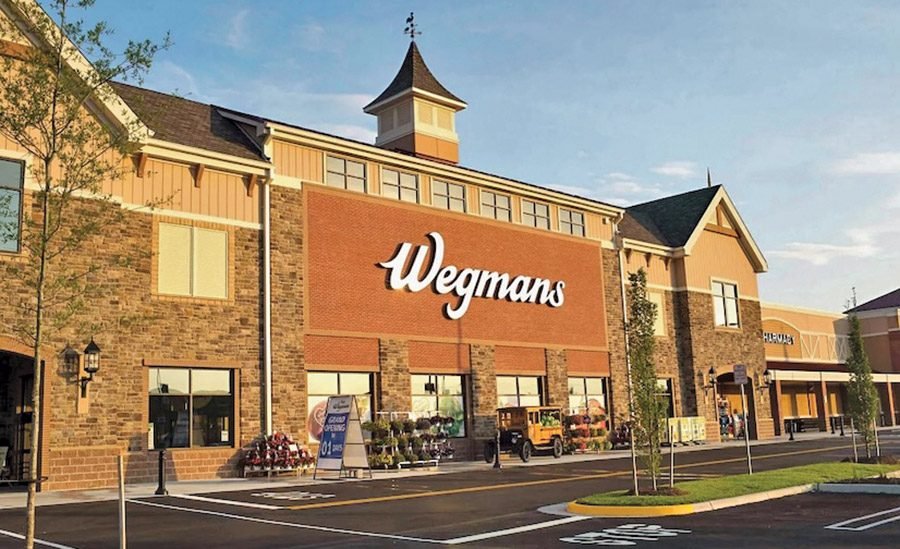
Frampton is delivering a 110,000-square-foot Wegmans Food Market in Charlotte’s Ballantyne submarket on a 14-acre site. The project includes site grading, infrastructure, utility coordination and vertical construction for the grocery entrance to the Charlotte market. Matthews says the project reflects population-driven retail demand tied to residential and job growth in the area.
Matthews describes the Charlotte market as healthy and relatively stable, with the pace of growth returning to more sustainable fundamentals after the peak of the post-COVID cycle. “The quality of project opportunities, the strength of the backlog and continued demand across multiple industries are contributing to a positive outlook,” he says.
