

Updated at 4:44 PM ET, July 7, 2026
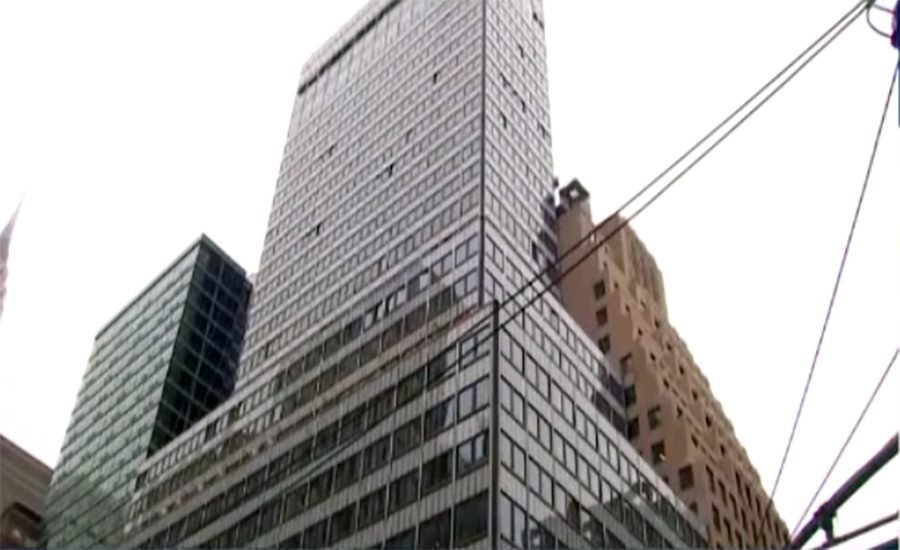
Construction crews working on one of New York City’s largest office-to-residential conversions evacuated a high-rise and neighboring blocks in Midtown Manhattan on July 7 after discovering two buckled load-bearing structural columns and collapsed floors on the 21st floor.
The discovery prompted city officials to declare the building unstable and begin emergency stabilization efforts.
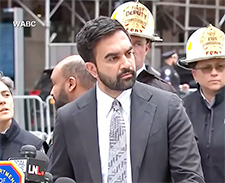
New York City Mayor Zohran Mamdani, along with FDNY and Department of Buildings officials, briefs reporters on July 7 about the emergency response.
Screen capture: WABC-TV
Mayor Zohran Mamdani said FDNY, the New York City Department of Buildings and other agencies responded shortly after 8 a.m. to reports of a structural problem at 235 E. 42nd St., the former Pfizer headquarters that is being converted into a residential complex. Officials said there were no injuries and all workers were accounted for.
“Our focus right now is the safety of New Yorkers,” Mamdani said during an afternoon briefing outside the collapse zone. At the time, officials said emergency crews continued to watch for movement inside the compromised structure.
DOB Commissioner Ahmed Tigani said inspectors found two structural load-bearing columns had buckled on the 21st floor, along with multiple cracks and sagging floor conditions.
Since first responders arrived, officials documented additional movement in a compromised column using monitoring equipment and FDNY drone observations, preventing engineers from immediately entering the building.
Looking for quick answers on construction and engineering topics?
Try Ask ENR, our new intelligent AI search tool.
Ask ENR →
NBC New York later reported, citing two sources briefed on the response, that the structure had shown no additional movement as of noon and that DOB and FDNY personnel were preparing to enter the building to determine if emergency shoring could safely begin.
“Once we can determine that it is safe to enter the building, then, in concert with the contractors’ ownership and in consultation with FDNY, we will deploy a plan to shore up that floor,” Tigani said.
The city plans to install emergency structural bracing to shift loads away from the damaged columns before investigators determine the cause of the failure.
MetroLoft said only a small section of the building was affected and the structure was not at risk of collapse, according to statements reported by several news organizations. The developer said it was working with DOB and FDNY on emergency response.
FDNY Department Chief John Esposito said the steel members “started to bend and deflect from the weight.” Because the building is a steel-frame structure, officials said their main concern is a localized structural collapse rather than a complete failure of the building.
“We’ve seen continuous movement,” Esposito said. “It’s still a very serious and dangerous situation.”
The city established a collapse zone and a “frozen zone” extending roughly from East 40th to East 45th Streets between First and Third Avenues. Crews evacuated the construction site and seven surrounding buildings, including residential and commercial properties. Earlier reports cited up to nine precautionary evacuations as the response expanded.
Complex adaptive reuse project
Tuesday’s emergency occurred at the tallest of the two former Pfizer office buildings that make up the redevelopment. MetroLoft Developers and David Werner Real Estate Investments are converting the former Pfizer headquarters complex into approximately 1.3 million square feet of residential space, including more than 1,600 apartments, more than 400 of which are designated as affordable. Completion is scheduled for 2027.
The redevelopment combines the former Pfizer office buildings on E. 42nd St. The shorter building at 219 E. 42nd St. incorporates a new reinforced concrete tower built within the footprint of the original structure. The adjacent 33-story tower at 235 E. 42nd St. has been expanded vertically with an 11-story addition that city officials said is on the way, while the existing tower is being converted to apartments.
Gensler serves as the architect and architect of record, while Collaborative Construction Management lists GACE as the structural engineer and JMV Associates as the MEP engineer.
Project documents released by GEODesign, the project’s geotechnical consultant, say the work required underground investigations coordinated with the Metropolitan Transportation Authority because the 7 subway tunnel passes under East 42nd Street. GEODesign said it developed foundation recommendations for the expanded buildings, designed rock anchor systems to withstand significant additional wind loads, and performed special inspections of the subsoil and rock anchors during construction.
Officials repeatedly declined to speculate on the cause of the structural distress. Tigani said the office-to-residential conversion underwent “an extensive and thorough review” by the DOB over the past two years, and stressed that investigators will determine whether the incident stemmed from design, construction sequencing or another factor.
“What is happening now is an investigation into what is the cause of why the undercut happened,” he said.
When asked about allegations raised during the news conference that corners may have been cut on construction, Mamdani said the city would not speculate while emergency stabilization remains underway.
“Our goal right now is to make sure this place is safe, this building is safe, this neighborhood is safe,” he said. “However, this investigation will continue as we want to ensure that these actions are not repeated.”
Metro Loft, Gensler and GACE did not immediately respond to requests for comment.
