


Kaplanoglu
Most people in the construction industry highlight the risk of deploying new technologies, such as artificial intelligence and robotics, while executing projects. On a recent site visit, the project manager’s first question was not, “What can this do?” It was, “How do I recover when it doesn’t come out?” This reaction should not surprise anyone. Our industry is based on risk reduction and risk transfer projects.
I previously wrote for ENR about how trust, not capability, determines whether workplace technology survives. Crews won’t adopt a tool they don’t believe in, no matter how capable it is. Confidence on the ground does not guarantee investment at the top. Executive leadership is often hesitant for a different reason: They’re evaluating AI and robotics against this quarter’s productivity benchmarks, not against the risk already on their balance sheet.
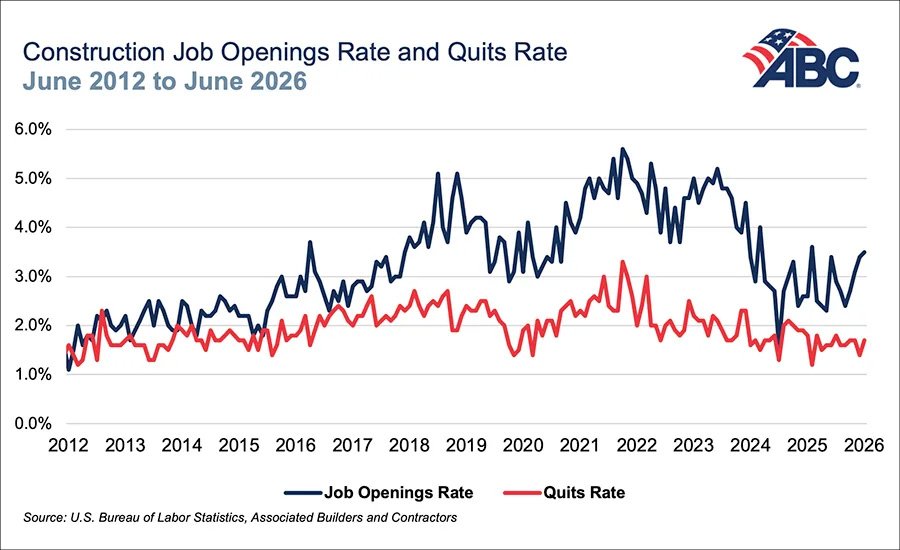
We are at the crossroads of a perfect storm. The construction industry needs to attract 350,000 to 460,000 net new workers each year, on top of normal hiring, to keep up with demand, according to data from Associated Builders and Contractors. Meanwhile, estimates from the National Center for Construction Research and Education show that 41% of the current construction workforce is expected to retire within the next decade. We’re trying to build more with a less experienced workforce, just as industry knowledge goes out the door.
The stakes here go far beyond construction. Construction is a $2 trillion market that affects almost every aspect of daily life. We’re now seeing two capital-intensive booms: AI infrastructure and the broader rebuilding of the country’s physical infrastructure. Both projects bid against each other for the same limited labor. Delaying or curtailing projects not only cuts into contractors’ margins; has consequences far beyond our sector. Our industry is the backbone of the US economy.
In my recent consulting work, I’ve seen construction companies reduce their backlog because they can’t afford it. Even when companies find labor, there is a second problem: finding people skilled enough to do the work at an acceptable level of productivity. I hear the same statement from operational leaders over and over again: “I need to find people who can do it.”
We’ve been here before. Historically, the industry has made its great leaps when external forces left it no choice. I experienced this first hand during my career at Lendlease. BIM adoption accelerated almost overnight once the economic crisis hit in 2008. We as an industry are at the beginning of a similar tipping point now, except this time the pressure isn’t a recession; it’s demographics and growth.
Tech companies promise productivity improvements and the ability to do more with the same workforce through AI and robotics. This is true, but it subsidizes the real value. Placed correctly, AI and robotics are not just a productivity upgrade. They reduce the risk of the labor gap that is already underway.
Looking for quick answers on construction and engineering topics?
Try Ask ENR, our new intelligent AI search tool.
Ask ENR →
There’s also a human argument here that the industry doesn’t make often enough. Our work is hard, stressful and unpredictable, and we face challenges every day. Automation and more predictable results not only protect the margin; they improve the day-to-day experience of doing this work.
It’s time to ask, “What is our exposure if the employment gap widens and we have done nothing?” Construction executives who ask this question will finance the tools. The industry has always known how to manage risk. We haven’t priced this one yet.
