

.webp?t=1790882570)
Congressional lawmakers from both parties have consistently criticized the Federal Emergency Management Agency’s ability to respond quickly to natural disasters and disperse federal funds more quickly for projects that mitigate damage risks.
The US Government Accountability Office, in a new report, lends credence to these claims, highlighting the large number of communities that spend months, even years, waiting for notification of whether they will receive funding from FEMA’s Building Resilience Infrastructure and Communities (BRIC) program for critical projects that remain “under review.”
On average, according to GAO, it takes FEMA seven to nine months to decide whether to fund a project.
“There’s a lot of waiting,” said Chad Berginnis, executive director and CEO of the State Floodplain Managers Association. He says members of his group told him this summer that his states were still awaiting funding awards and obligations from the 2022 and 2023 funding rounds, some of them for “very large” projects.
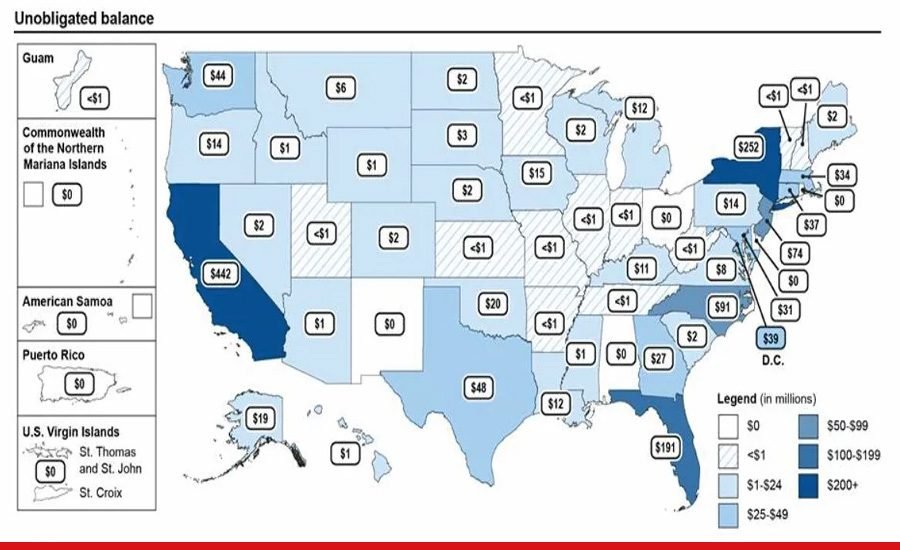
While the BRIC program has accumulated about $4.8 billion in federal credits to distribute for resilience projects and programs, only about half has been dispersed in the first three grant application rounds since the program was established in 2020.
As of March 2025, 700 applications for grants from local communities, considered sub-applications for state grants, remained in limbo. Communities told GAO that such review deadlines could lengthen project timelines and increase costs.
FEMA also did not approve or deny any grant applications while the BRIC program was canceled from April 2025 until March 2026, when a federal court order reinstated it. Shortly thereafter, the agency announced a $1 billion funding opportunity for new applicants.
Looking for quick answers on construction and engineering topics?
Try Ask ENR, our new intelligent AI search tool.
Ask ENR →
FEMA “failed to communicate key information internally and externally until March 2026 when it announced it was restarting BRIC,” the report’s authors said. During the shutdown, he “did not clarify which subsidies would end.”
Officials and stakeholders said the lack of actionable information from FEMA officials created challenges and delayed mitigation efforts. “In some cases, projects were canceled,” GAO noted, adding that one state’s officials said its community had already spent significant time, effort and resources on its application, and that the project was “unlikely to continue without BRIC funds.”
Chris Currie, director of Homeland Security and Justice at the GAO and lead author of the report, told ENR, “This puts the community in a real conundrum. The participants are saying that we don’t have $20 million right now to tackle the rest of the project because we expected to receive money. So we put [the project] on hold Wait?”
A seismic upgrade project in Mesa County, Calif., had received state approval to begin construction in April 2024, but most of the project funding needed to move the work forward was put on hold because the application was still awaiting approval when the BRIC program closed in 2025, the Kern Valley Sun informed
Adding fuel to the fire
Shortly after the BRIC program was reinstated this year, FEMA announced a new $1 billion funding opportunity notice that closed on July 23.
The cumulative impact of these developments has created confusion among various stakeholders, says Brett Mattson, senior legislative director of justice and public safety for the National Association of Counties.
“This 11-month hiatus that we had with the program being canceled, then brought back and new money going out the door has obviously delayed a lot of these projects,” he told ENR. “I think we’re still trying to pick up the pieces in terms of what it means moving forward and how FEMA is going to work, and I don’t think it’s immediately clear to us how [program operations] will develop over the coming months or years.”
Mattson added that he is hopeful that with the BRIC program up and running again, the backlog of projects awaiting funding decisions can be reduced.
ahead
The GAO report makes a number of recommendations, most of them related to greater transparency and communication with stakeholders, and FEMA officials say they will adopt most of them.
If Congress passes the FEMA Act, which passed the Transportation and Infrastructure Committee in 2025 but has not yet been introduced in the Senate, the agency would be forced to streamline its review processes, said Mattson, the executive of the National Association of Counties.
Currie, the GAO official, said FEMA was put in a difficult position, between the cancellation of the program and DOGE-related staff cuts. “In the end we may never know who made the decision to cut the program,” he noted, adding that he has spoken with agency officials and believes they are sincere about adopting the recommendations. “I think they’re committed to helping states build resilience because they understand how important that is to disaster prevention,” Currie said.
Still, the agency lost more than a year when billions of dollars could have been put to work in mitigation before the disaster, he said.
“I think there’s also a fair amount of skepticism,” said the floodplain association’s Berginnis, who noted he’s heard that in some states, fewer communities applied during the last funding call.
“Basically, you’re waiting for funding for a program that was canceled and then restarted, but no money is coming your way, so why invest the time and effort to apply?” he said
