


Construction projects are more complex than ever. Costs are rising. Schedules are adjusted. Landlords, developers and communities expect more certainty, quality and value. At the same time, buildings are becoming more sophisticated and the challenges of delivering them are multiplying.
These pressures are real, but they also create an opportunity to rethink how we build. I often say, “No two points in time are the same.” Artificial intelligence, data and other advanced technologies can help us face this unique moment, but only if we apply them to the realities of construction.
The AI conversation cannot be rooted in technology for technology’s sake. It should start with the work, including the decisions teams make, the risks they manage, and the problems they solve on projects every day. The question is not whether the technology is available. It’s how we use it to coordinate complex jobs, identify risks earlier and give qualified builders more time to lead teams and tackle challenges that require experience and judgment.
Build the base on data
Just as a building requires a solid foundation, organizations need reliable data before they can implement AI effectively. Much of the information generated by construction projects remains incomplete, inconsistent or trapped in disconnected systems. A company may have thousands of documents and decades of project history, but that does not guarantee that the information is structured, accessible or reliable.
AI cannot compensate for poor data. Builders must treat data as the core infrastructure of the project. This means improving the way information is captured, organized and shared, making it accessible to the people closest to the work, and creating common standards so that lessons from past projects can inform future ones.
More than a decade ago, Suffolk began investing in clean, structured data because we believed it would become an increasingly important foundation for better decision-making. This decision has paid off.
Today, this early investment in data and our “clean data lake” provides our teams with insights they can use to identify patterns, anticipate risks, and act earlier in the planning process, before challenges impact cost or schedule.
The quality of an AI system will always be limited by the quality of information it can access. Therefore, data cannot be a back-office concern driven only by corporate technologists. Data must be a leadership priority fueled by people in the field.
Integrate AI where work happens
AI must be integrated into workplaces, where construction takes place. The most valuable tools will be practical and closely connected to the decisions that project teams make on a daily basis.
AI can review drawings and specifications to identify inconsistencies before work begins. May assist in preparing and processing routine tasks, including requests for information. Can analyze schedules and historical performance to identify potential impacts on costs and completion dates. It can make critical project knowledge easier to find and use.
None of these applications, considered individually, may seem revolutionary. But construction outcomes are often determined by the accumulation of small decisions, delays, and unresolved issues. Finding a problem early, even in a matter of days as opposed to weeks, can have an outsized impact on project cost, schedule, quality, and safety.
The most useful applications will be developed in collaboration with the people who understand the work best and will be refined based on the conditions of real projects. The closer the technology is to the work, the more likely it is to solve it
correct problems
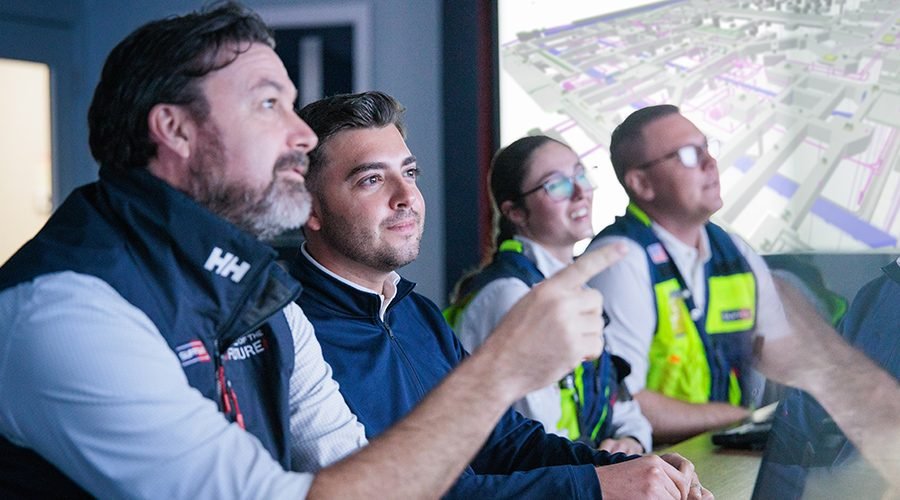
At Suffolk, this principle led us to launch Jobsite of the Future in workplaces across all sectors and invest in 100MAG, an innovation hub located at our Suffolk HQ campus in Boston. Together, as part of our comprehensive innovation ecosystem, these initiatives integrate AI engineers into workplaces and foster closer partnerships between data scientists, operational leaders, and project teams.
AI engineers working alongside builders can identify real challenges in the field in real time, develop solutions specific to those challenges, and quickly learn from the results. Ideas that emerge in projects can be tested, refined and scaled through 100MAG in the field.
This continuous connection between the workplace and the center of innovation allows us to move with urgency while keeping innovation grounded in hands-on experience. It also ensures that new tools are measured by whether they actually improve project performance, not by how sophisticated the underlying technology may seem.
Gain confidence and expand human capacity
Technology will only be valuable if the people responsible for the projects believe in and trust it. Trust is earned when technology is transparent, useful and accountable. Project teams need to understand where information comes from, how recommendations are generated, and when human judgment is needed. AI should help people make better decisions. It should never obscure who is responsible for making them.
This is especially important in safety, quality and schedule management. AI can identify patterns and potential hazards on the surface, but it cannot replace a superintendent who walks a site, a foreman who understands jobsite conditions, or an engineer who evaluates whether a proposed solution is appropriate.
The best systems will combine machine speed with human judgment. They will reduce the time spent searching for, documenting and reconciling information, creating more time to communicate, orient, solve problems and lead teams. Technology should amplify leadership and craftsmanship, not diminish it.
This is also how we should think about the impact of AI on the construction workforce. Administrative burdens contribute to burnout and can pull experienced professionals away from the work they do best. If AI can automate repetitive tasks and improve access to project knowledge, it can make the industry more attractive and strengthen, not diminish, the human side of construction.
The workforce case for hands-on automation is becoming clearer. In its 2025 Workforce Survey, the Associated General Contractors of America and the National Center for Construction Research and Education found that 45 percent of contractors said labor shortages are causing project delays. At the same time, 45% of respondents expected robots and artificial intelligence to positively affect construction jobs by automating error-prone manual tasks, while 44% said these technologies could improve the quality of work and make workers safer and more productive.
AI should augment human capability. It should give people better tools, improve decision-making and allow them to focus on what they do best, which is building, solving problems and developing the next generation of leaders.
Adopt with discipline
Not every contractor, designer or owner will be ready to make the same AI investments or move at the same speed. But every leader can start the journey by asking practical questions: What decisions consume the most time in our projects? Where do errors occur repeatedly? What information is difficult for teams to find? What data do we already collect and can we trust it? How will we know if a new tool improves performance?
The answers will reveal where technology can make a significant difference. This will always be more valuable than adopting AI or buying licenses for AI tools simply because it’s trendy.
Construction has always evolved through a combination of craftsmanship, engineering and innovation. Virtual design and construction changed the way teams visualize and coordinate complex buildings. Better equipment expanded what crews could achieve. Modern project delivery methods changed the way owners, designers and builders collaborated. AI is the next step in this evolution, but only if we apply it to the realities of construction.
The goal is not to build buildings with fewer people, but to help people build better with more complete data and information, fewer avoidable obstacles, and more confidence in their decisions.
I believe the future of construction will be defined by companies that put AI to work responsibly, on real projects, with real teams, solving real problems. In the end, AI will not single-handedly define the future of construction. The future will belong to builders who know how to combine their power with human judgment and turn better information into better processes and better buildings.
By John Fish, President and CEO of Suffolk
