

A bipartisan House proposal released June 4 would create a federal framework to govern the development of artificial intelligence while launching new workforce forecasting programs and overhauls of infrastructure and energy barriers linked to the technology’s growth.
The 269-page discussion draft of the Great American Artificial Intelligence Act, released by Reps. Jay Obernolte (R-Calif.) and Lori Trahan (D-Mass.) would establish a federal government structure for advanced AI systems, expand research and workforce development programs and create a new Center for AI Standards and Innovation within the U.S. trade proposal also on a temporary basis. regulate the development of the AI model.
The draft follows President Trump’s June 2 executive order directing federal agencies to create a voluntary framework for AI developers to provide the government with early access for cybersecurity and national security review before launch. The order is explicit: it does not create a mandatory licensing, permitting or pre-authorization process for AI development.
“Artificial intelligence is advancing rapidly, which is why Congress must take a thoughtful, bipartisan approach to regulating this critical technology,” Obernolte said in announcing the discussion draft.
“This discussion draft is an important step toward building a clear federal framework that promotes innovation, protects Americans from emerging risks, and ensures that the United States continues to lead the world in AI,” he added.
While the bill’s regulatory provisions are primarily aimed at developers of advanced AI foundational models such as OpenAI and Anthropic, lawmakers also included a number of economic and labor measures aimed at industries adopting AI technologies.
The proposal would require the U.S. Department of Labor to establish an AI workforce research center, identify at least 15 occupations considered particularly sensitive to AI-driven disruption, and publish recurring forecasts assessing the technology’s effect on employment. Federal labor and business surveys would also be revised to gather more information on AI adoption and workforce impacts.
Looking for quick answers on construction and engineering topics?
Try Ask ENR, our new intelligent AI search tool.
Ask ENR →
Employers conducting mass skilled layoffs should disclose when AI was a substantial factor in workforce reductions and estimate the percentage of job losses attributable to the technology.
The legislation comes as the construction industry, a notoriously slow adopter of technology, increasingly deploys AI tools for scheduling, estimating, document management, design support, safety monitoring and project analysis. The development of AI in construction is also advancing as other technologies adopted by the AEC industries before it, such as CAD and BIM, by developing language models built with construction data separate from the more general foundation models.
While most of the construction industry—contractors, engineers, and designers—would be affected as users rather than developers of AI models, the Associated General Contractors of America 2025 Construction Hiring and Business Outlook survey found that 44% of contractors surveyed plan to increase investment in AI by 2025.
AGC officials said contractors are already using AI to streamline back-office operations and support functions such as estimating, contract writing and marketing, while applying the technology to analyze performance and safety data.
“A lot of the AI we’re hearing about today is related to streamlining back office operations, using AI tools to support estimating, contract writing and marketing services,” says Brian Turmail, vice president of industry partnerships and image. “It is also a viable tool for analyzing performance and security data.”
The accelerating pace of AI evolution and fears of job obsolescence are the main drivers of the legislation. “The threats that AI poses to our national security, our safety and our workforce are here and growing every day,” Trahan said.
“This bipartisan framework is designed to address the challenges posed by this rapidly advancing technology without stifling American innovation,” he added.
RELATED
AI in construction: from more work to better work
Data centers, infrastructure also in focus
The move also affects one of the fastest-growing sectors of construction: AI infrastructure.
AGC said one of its primary interests in the legislation is to ensure that AI-related investment continues to support demand for data center construction projects.
“We appreciate that investments in AI technology are driving much of the significant new demand for data center projects, and we want to ensure that demand remains strong,” adds Turmail.
The bill would require the Government Accountability Office to identify federal statutes and regulations that “relate to infrastructure and energy and unduly burden artificial intelligence systems” and recommend legislative or administrative changes.
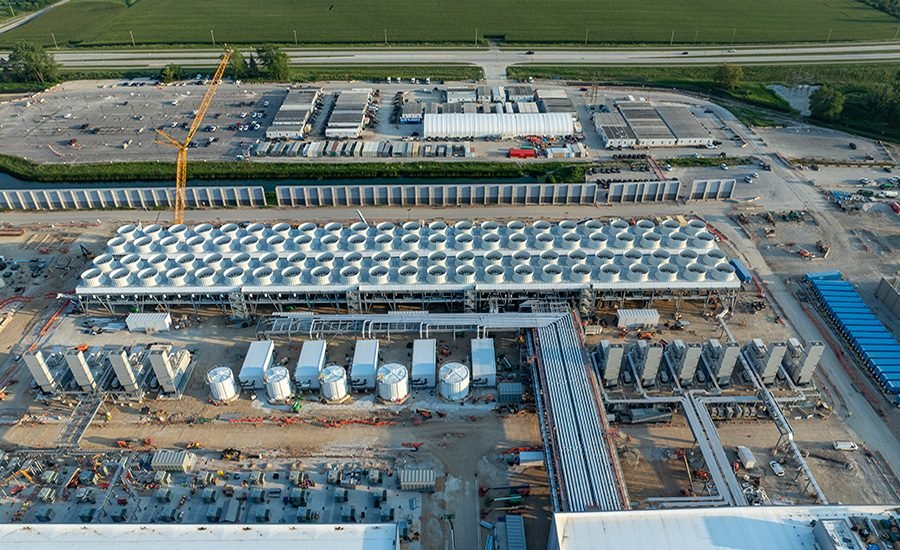
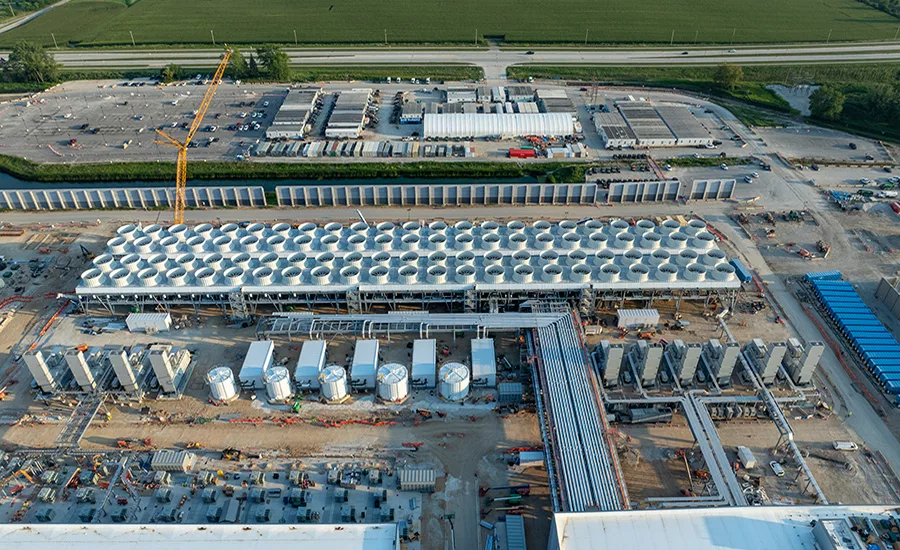
Another provision directs a federal review of liquid-cooling technologies used in AI data centers, which are generating billions of dollars in investment as developers build facilities capable of handling increasingly intense computing workloads.
At the heart of the proposal is the creation of the AI Standards and Innovation Center within the Department of Commerce.
The center would develop voluntary standards and best practices, evaluate advanced AI systems, and support testing and evaluation programs. The legislation would authorize $100 million annually from 2027 through 2029 for the center.
One of the most debated provisions of the proposal would prevent state and local laws specifically regulating AI model development for three years after enactment. The draft preserves state authority over the deployment and use of AI, as well as generally applicable state laws and common law remedies.
Critics argue the measure would go too far to limit state oversight. Public Citizen said the proposal “would strip states of their authority” to address AI-related harm while relying on federal safeguards that have yet to be established. Both OpenAI, the creator of ChatGPT, and Anthropic, the creator of Claude AI, have supported the bill.
In a joint commentary accompanying the proposal, Obernolte and Trahan argued that AI systems are developed and deployed across state lines and require a consistent national framework.
“Instead of allowing protections to exist in only a handful of states or forcing innovators to navigate dozens of different legal regimes, our framework would establish a national standard,” they wrote.
Sponsors solicit comments from industry groups, labor organizations, researchers and other stakeholders before formally introducing legislation.
