

Greg Batista, PE, CGC, SI, is a Fort Lauderdale, Florida structural engineer, certified general contractor and special inspector with over 35 years of experience in structural inspections, concrete restoration, corrosion mitigation and building safety. He is president of G. Batista Engineering & Construction. The opinions are the author’s own.
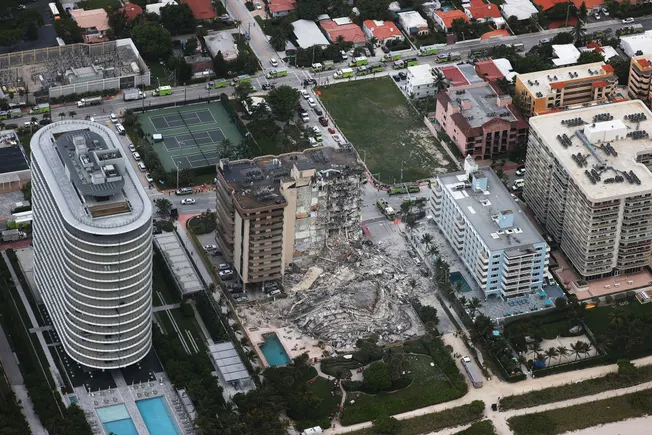
Five years ago this June, the collapse of Champlain Towers South forced the construction industry to confront what regular inspections alone cannot prevent. The reforms that followed were necessary. But blind spots between inspections may still remain.
Aging buildings do not deteriorate according to a schedule.
As codes evolve and technology becomes more affordable, continuous monitoring will become a standard of care in Florida’s built environment and beyond, supporting the long-term safety, transparency and resiliency that property owners, residents and regulators expect.
The limits of instant inspections
Modern programs such as landmark inspections and structural integrity reserve studies represent significant progress. They require professional assessments and long-term planning for structural repairs. However, they still only capture a moment in time.

Greg Batista
Permission granted by Greg Batista
Corrosion, cracking and deflection often start internally. These processes can progress for months or years without visible signs. When deterioration appears on the surface, the damage is often extensive and expensive to address.
Between inspection cycles, engineers and owners are largely unaware of how conditions are changing within a structure.
Continuous awareness fills the void
Other safety-critical industries have long relied on continuous monitoring. Aviation, energy and transportation systems monitor performance in real time because failures carry unacceptable risk. Buildings are now starting to follow the same logic.
Structural monitoring systems use sensors to continuously measure movement, vibration, stress, and environmental conditions. When combined with data analysis, these systems reveal trends rather than isolated observations.
This does not replace inspections. It strengthens them.
Continuous data allows engineers to confirm whether a structure is behaving as expected, identify abnormal changes early, and prioritize maintenance before conditions escalate. It also provides objective documentation when concerns arise during nearby construction or extreme weather events.
From sensors to vision
Continuous structural monitoring is not a new concept, but its application to private buildings has evolved rapidly. The first monitoring systems were developed for aerospace, defense and large civil infrastructures, where safety-critical assets required constant monitoring. Advances in sensor technology, data processing and analytics have made similar approaches viable for residential and commercial structures.
Modern structural health monitoring systems combine distributed sensors, data acquisition platforms and analytical tools to track how a building is behaving over time. Sensors measure motion, vibration, strain and environmental conditions. Data platforms organize this information into a continuous record. Analytics distinguish normal structural behavior from emergent anomalies.
What has changed the most in recent years is the ability to interpret this data at scale. AI-based algorithms can identify subtle deviations that would be difficult to detect through regular inspections alone. They can correlate structural responses with environmental conditions, such as moisture, loading, or nearby construction activity, and help predict how deterioration is likely to progress if the conditions persist.
For engineers, this shifts monitoring from passive observation to active decision support. Instead of relying solely on visual cues or infrequent measurements, teams can assess trends, verify that repairs are working as intended, and prioritize intervention based on evidence rather than assumptions.
In practical terms, buildings can now be treated less as static assets and more as dynamic systems capable of reporting early signs of distress long before damage becomes visible on the surface.
Why this matters now
Florida’s aging coastal infrastructure is at the forefront of this transformation. The recent regulatory environment has raised expectations for construction management. Owners and managers must plan long-term structural costs. Insurers and lenders increasingly expect evidence that risk is being actively managed.
At the same time, construction activity near existing buildings has intensified. Excavation, piling and foundation work can introduce vibrations and movements that accelerate deterioration. Without control, engineers are often left responding after the fact.
Continuous monitoring allows teams to verify impacts in real time and respond with confidence instead of speculation.
From reaction to prevention
When deterioration is detected early, repairs are smaller, less damaging and more predictable. Maintenance becomes a planned activity rather than an emergency response.
Inspections will always be essential. But relying on them alone no longer reflects how aging buildings behave or how risk should be managed.
As Florida’s buildings continue to age and scrutiny increases, continuous monitoring offers a way to move from reaction to prevention, giving engineers, owners and regulators the visibility needed to identify hidden deterioration before it becomes catastrophic.
Click here to sign up to receive multifamily and apartment news like this article in your inbox every weekday.
