

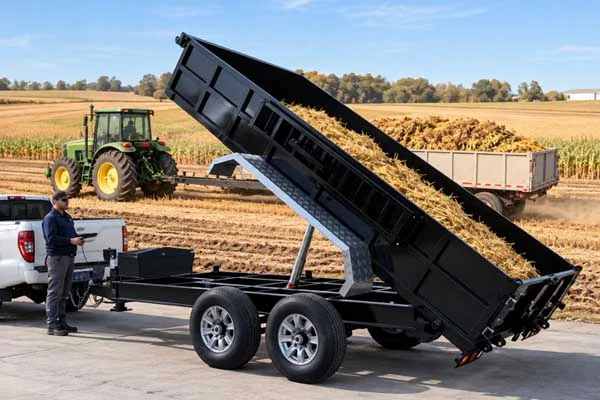
Tipper trailer: what to check before buying?
Choosing the right frame trailer starts with understanding how the trailer’s structure affects performance, safety and long-term operating costs. For contractors, farmers, landscaping companies and equipment operators, a strong trailer frame is the foundation that determines how well the trailer handles heavy materials, frequent load cycles and demanding work conditions.

A frame trailer is built to provide better support for transporting and unloading materials such as gravel, soil, construction waste, agricultural products and gardening supplies. Before purchasing, buyers should carefully evaluate the frame design, payload capacity, hydraulic system, axle configuration, and manufacturing quality to ensure the trailer meets their work requirements.
Why frame design is important when choosing a dump trailer
The frame is one of the most important parts of a dump trailer because it supports the weight of both the trailer body and the materials being transported. A poorly designed frame can lead to bending, cracking, uneven loading and higher maintenance costs over time. A well-designed frame trailer provides better stability and allows operators to work more efficiently in demanding environments.
As the trailer frame supports heavy-duty applications
A heavy-duty frame trailer relies on reinforced structural components to distribute weight evenly across the chassis. This design helps reduce stress on critical areas such as the tongue, crossmembers, axle mounting points and lift mechanism. For companies that use trailers on a daily basis, frame strength directly influences service life and operational reliability.
Common industries that use tipper trailers
Frame trailers are widely used in industries where materials must be transported and unloaded quickly. Construction companies use them to move gravel, sand and demolition debris. Agricultural operators use them for soil, fertilizer, crops and farm supplies. Landscaping companies often rely on dump trailers for mulch, rock and yard waste.
What is a frame dump trailer?
A rack frame trailer is a trailer equipped with a reinforced chassis and a hydraulic lift system that allows the loading platform to tilt and unload materials. Unlike traditional trailers that require manual unloading, dump trailers reduce labor requirements and improve workplace productivity.
Difference between frame dump trailer and standard dump trailer
The main difference is the structural design. A rack frame trailer typically uses a stronger chassis structure designed for heavier loads and repeated commercial use. Standard dump trailers may be suitable for lighter applications, while frame dump trailers are often selected for demanding work environments where durability is a priority.
Major components of a heavy duty dump trailer frame
Important components include main frame rails, crossmembers, suspension system, axles, hydraulic cylinder supports and trailer bed supports. Each component works together to maintain stability when carrying heavy loads and during tipping operations.
Key factors to check before buying a tipper trailer
1. Frame material and structural strength
The quality of the frame material directly affects durability. Buyers should review steel thickness, weld quality, reinforcement design, and corrosion protection methods. A reliable rack-and-pinion trailer must be able to handle repeated load cycles without excessive deformation.
2. Load capacity and trailer size
The correct trailer size depends on the type of materials being transported and the tractor vehicle available. Overloading a trailer can reduce safety and shorten the life of components. Before purchasing, please confirm the rated payload capacity and make sure it matches your daily work requirements.
3. Performance of the hydraulic dumping system
The hydraulic system determines how smoothly the cargo trailer can be raised and lowered. Buyers should check cylinder quality, lift capacity, hydraulic connections and ease of maintenance. A reliable hydraulic system helps operators unload materials faster and reduces downtime.
4. Axle and suspension configuration
Axle selection affects trailer stability, load distribution and trailer performance. Single-axle trailers can work for lighter applications, while tandem-axle configurations are often preferred for heavier commercial duties because they provide improved load support and on-road stability.
As a tipper trailer improves work efficiency
The biggest advantage of a tipper trailer is the reduced unloading time. Instead of manually removing materials, operators can activate the hydraulic system and unload the loading platform in minutes. This makes the trailer especially valuable for companies where productivity and work efficiency are important.
Faster upload and download operations
Construction and agricultural operations often involve moving large amounts of materials throughout the day. A dump trailer simplifies these tasks by allowing quick unloading at different locations, helping crews complete more work with fewer manual steps.
Applications suitable for construction and agriculture
From hauling gravel on construction sites to moving feed and soil on farms, frame trailers offer flexibility for different industries. Their durable structure makes them suitable for both commercial operators and private companies that require reliable transport equipment.
Maintenance requirements for the frame tipper trailer
Protection of the frame from corrosion and wear
Regular inspection helps extend the life of the trailer. Operators should clean the frame of dirt and debris, check for rust or damage, and apply appropriate protective treatments when necessary, especially when working in wet or corrosive environments.
Checking hydraulic components and moving parts
Hydraulic cylinders, hoses, hinges and pivot points should be inspected regularly. Keeping these components well maintained helps prevent unexpected failures and ensures consistent pour performance.
Frame trailer vs other trailer types
Dump trailer vs flatbed trailer
A flatbed trailer is useful for transporting equipment, machinery and large items that require a flat loading surface. A rack frame trailer is more suitable for loose materials because it can unload the load quickly using hydraulic lift.
Single vs Tandem Axle Dump Trailer
Single axle dump trailers are generally easier to maneuver and suitable for lighter loads. Tandem axle dump trailers offer greater stability and load support, making them common choices for commercial and heavy-duty applications.
How to Select a Reliable Frame Trailer Manufacturer
Manufacturing quality and customization options
A professional trailer manufacturer should provide consistent welding quality, reliable components and customization options based on customer requirements. Buyers should consider manufacturing experience, product range and quality control processes before making a decision.
After-sales support and availability of spare parts
Long-term trailer ownership depends on support service. Access to spare parts, technical support and maintenance guidance can reduce downtime and improve the overall ownership experience.
Frequently Asked Questions about the Frame Dump Trailer
What is a tipper trailer for?
A tipper trailer is used to transport and unload loose materials such as gravel, soil, construction debris, agricultural products and landscaping materials. Its reinforced frame structure allows it to handle demanding transport conditions, while the hydraulic dump system improves unloading efficiency.
How much weight can a frame trailer carry?
Load capacity depends on trailer size, frame design, axle configuration and manufacturer specifications. Buyers should always select a trailer based on their actual load requirements and ensure compatibility with their towing vehicle.
Is a tipper trailer suitable for use on the farm?
yes Many farms use frame trailers to transport soil, feed, crops, equipment and maintenance materials. The hydraulic dump function helps reduce manual labor and improves efficiency during daily operations.
What should I inspect before buying a dump trailer?
Before purchasing, buyers should evaluate frame strength, welding quality, hydraulic system performance, axle rating, suspension design, corrosion protection and manufacturer reliability to choose a trailer that will meet long-term operational needs.
