

A Westinghouse-Bechtel consortium and Poland’s state nuclear developer said on September 23 that they had agreed on the main commercial terms of an EPC contract for the country’s first nuclear power plant.
The deal with Polskie Elektroownie Jądrowe moves the three-unit project, which includes the Westinghouse AP1000 reactor design, closer to a final construction contract after engineering and construction work progressed for months while negotiations continued. The parties aim to complete negotiations by the end of the year.
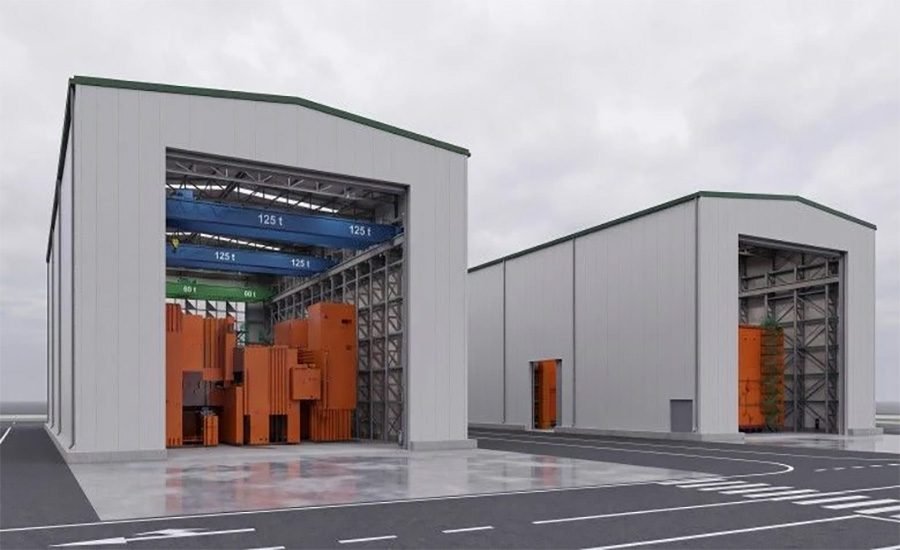
A day later, Bechtel awarded a Polish consortium led by Polimex Mostostal a design-build contract valued at about $80 million for two-module assembly buildings where some of the larger reactor components will be assembled near the construction site.
Polskie Elektroownie Jądrowe and the Westinghouse-Bechtel consortium “have agreed on the main terms of the contract for the construction of the first Polish nuclear power plant,” the Polish state-owned entity’s president, Marek Woszczyk, said in a statement. The agreement, he said, provides the basis for “more detailed negotiations” on the remaining terms of the EPC.
Neither the value of the EPC contract nor the commercial terms agreed so far were disclosed.
ENR reported in August that the consortium and Polskie Elektroownie Jądrowe were carrying out the work originally planned under the EPC contract through an extended engineering development agreement, which includes the design of the nuclear island, turbine island and balance of plant.
Three Westinghouse AP1000 units will provide 3,750 MWe of generation capacity at the Lubiatowo-Kopalino site in Choczewo, near Poland’s Baltic Sea coast. Polskie Elektroownie Jądrowe transferred management of the 740-hectare site to Bechtel in August, when large-scale construction, drainage and temporary road construction were beginning.
Looking for quick answers on construction and engineering topics?
Try Ask ENR, our new intelligent AI search tool.
Ask ENR →
According to the European Commission, the project is financed with a combination of state capitalization and external debt, with about 52 billion dollars. Poland has authorized about $15.8 billion in state capital for Polskie Elektroownie Jądrowe, with the financing structure calling for 70% of the project’s costs to come from external debt.
Assembly contract for the awarded module
The Polimex contract covers the engineering and design documentation required for obtaining permits, as well as materials, structural assembly, testing, acceptance and final billing for both buildings. The contract has a performance period of 1,158 days, with compensation combining lump sum and cost estimate components and subject to indexation under specified conditions.

A 1,140-tonne CA01 structural module is erected at Vogtle Unit 3 nuclear island in Georgia in 2015. Poland’s similar AP1000 project will use two new assembly buildings to also build massive reactor modules on site.
Photo courtesy of Georgia Power
Each building will measure approximately 423 feet long, 180 feet wide and 144 feet high, with reinforced concrete piles and columns supporting a reinforced concrete slab and structural steel frame enclosed by insulating panels and a roofing system.
Climate controls will allow welding and assembly to continue 24 hours a day while protecting the work from precipitation, wind and extreme temperatures. Each building will contain three overhead cranes, two of about 138 tons and one of about 66 tons, to maneuver components.
These will be the first facilities in Poland used to assemble nuclear island components weighing more than 1,000 tons, Bechtel Polska President Leszek Hołda said in a statement. The contract is the first to directly support construction of the plant’s nuclear area, he said.
AP1000 nuclear construction relies heavily on prefabricated structural and mechanical modules. The largest, including the approximately 1,000-ton structural module CA01, will be assembled in temporary buildings because components weighing hundreds of tons cannot be transported to the site fully assembled.
Crews will also assemble the containment vessel rings and containment roof, along with shield construction panels. Work inside the structures will include non-destructive welding examinations, pressure testing and precision surveying and certification before the completed modules are lifted by a ring crane and placed on the base of the generating unit.
Polish contractors play a bigger role
More than 10 major contracts have been awarded to Polish subcontractors this year, along with smaller awards, according to Poland’s Energy Ministry. The combined value of contracts awarded to Polish companies in the Lubiatowo-Kopalino project is estimated at more than $570 million.

Polish contractors are building the new national road serving the Lubiatowo-Kopalino nuclear power plant, which includes earthmoving, drainage and soil improvement. Polimex companies are part of the design and construction team for the first approximately seven-mile stretch of road.
Photo courtesy of GDDKiA
Budimex is carrying out earthworks and construction of temporary infrastructure, DORACO is supporting geological and geotechnical investigations and Unihouse is building support facilities for 1,000 workers. Other Polish contractors are developing the project’s materials lab and providing site security. A consortium that includes affiliates of Polimex Mostostal is also building the first approximately seven-mile stretch of a new national highway serving the nuclear plant with a design-build contract valued at more than $46 million.
The EPC agreement by itself does not authorize nuclear construction. Polskie Elektroownie Jądrowe submitted its application for a nuclear construction license in March and plans to apply for an independent construction permit in 2027. Current field activity remains preparatory work, with the first nuclear concrete targeted for the fourth quarter of 2028.
Commercial operation of the three units remains targeted for 2036, 2037 and 2038, respectively. Woszczyk said in a statement that the consortium will be responsible for building the plant, and the first electricity is expected to reach Poland’s grid in 2036.
