

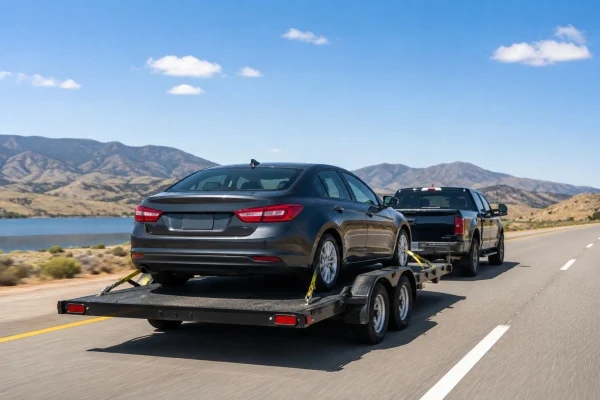
Towing safety starts before you even start the vehicle. Whether you’re managing a commercial fleet, transferring inventory between dealerships, or hauling equipment across vast farmland, the inspection process remains the same; skipping this step can allow minor problems to escalate into costly breakdowns. The following five areas cover the systems most likely to fail during summer operations. Be sure to perform these checks every time, not just before long-distance trips.
In hot weather, tire failure is a leading cause of towing accidents, but these problems are almost entirely preventable. High temperatures cause the air inside the tires to expand; if the tire pressure is already nearing the limit, a reading that appears normal during a morning check could increase in the afternoon, placing the tire in a dangerously overloaded state.
When a trailer is in motion, its braking system and wheel bearings are subjected to loads greater than those experienced by almost any other system. The brake pads and rotors of the towing vehicle must withstand the additional impulse generated by a fully loaded trailer, while the trailer brake controller, either electric or hydraulic, must be calibrated to account for this load.
Towing in high temperature environments puts a lot of pressure on any cooling system. The engine is already under a heavy load; when combined with temperatures reaching 95°F (approximately 35°C) and a heavy trailer, coolant temperatures can rise rapidly.
When choosing a trailer, prioritize size, weight capacity, and durability. Safety features such as reliable brakes, solid hitches and robust materials are essential. Also, evaluate your trailer’s storage options, insulation, and ventilation, especially if you plan to travel in extreme weather conditions.
Drivers who avoid breakdowns on the road are not necessarily the most experienced, but they are the most consistent. They check the same systems every trip, adjust to the conditions they actually drive in, and treat the pre-trip inspection as a fixed cost rather than an optional step.
