


Builders risk insurers reward contractors and project owners who can demonstrate how they manage risk on the jobsite, which in some cases results in reduced deductibles, premium credits and enhanced coverage terms for projects that implement loss prevention and control technologies.
As carriers face persistent water damage losses and growing concentrations of value in megaprojects ranging from high-rise towers to data centers, insurers in recent years are encouraging the use of new approaches, including direct discounts. While adoption remains uneven, brokers, carriers and technology providers say insurers are placing more weight on demonstrable risk management practices, even incorporating them directly into coverage decisions.
A partnership announced June 25 between builders’ risk insurer Shepherd and Toronto-based construction technology company Brickeye is the latest attempt to link insurance costs with technology adoption. Under the program, projects using Brickeye’s water loss prevention platform are eligible for incentives through Shepherd’s “Shepherd Savings” program, including reduced water damage deductibles and premium credits.
“What we’re trying to do is bring behavior-based pricing into commercial insurance,” says Justin Levine, Shepherd’s CEO.
Rather than relying solely on historical loss data and underwriting questionnaires, Levine says insurers increasingly have access to real-time information about how contractors operate in the field and what technologies they use to avoid losses.
The implications can be significant. Levine says projects using Brickeye’s technology can reduce water damage deductibles by 50% or more because leak detection sensors and automated shutoff systems materially alter a project’s risk profile.
The concept is not new. Insurers have spent several years increasing scrutiny of water damage mitigation plans, severe weather preparedness and other project-specific controls as deductibles increased and coverage requirements tightened. The difference now, industry sources say, is that some insurers are offering financial rewards rather than simply demanding them.
Looking for quick answers on construction and engineering topics?
Try Ask ENR, our new intelligent AI search tool.
Ask ENR →
From risk management to the price of risk
“It’s becoming very common now,” says Sedat Kunt, national leader of Marsh’s builder risk practice. “It’s one of the most significant changes in builders’ risk underwriting.”
Water damage remains a major factor. Kunt said plumbing-related losses continue to rank among the top causes of builder risk claims, prompting insurers to seek greater visibility into how contractors monitor temporary water systems, respond to leaks and manage exposure during construction.
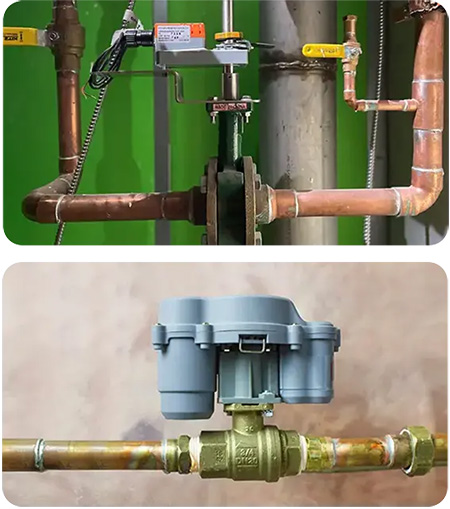
Water flow sensors and automatic shutoff valves can detect leaks, monitor abnormal water flow, and automatically shut off water service before small leaks turn into major losses. Some builders risk insurers are beginning to recognize these systems when assessing project risk and underwriting conditions.
Photo: Alert Labs
Darren Tasker, head of construction underwriting for Allianz Commercial in North America, says operators are increasingly recognizing the value of monitoring technologies and factoring them into their assessments.
“There’s an MGA based in San Francisco called Shepherd that really embraces the technology and is pretty transparent in their quotes about the discount the company gets,” says Tasker.
He adds that the adoption of water mitigation systems in large building projects can already be close to 50% or more, depending on the size and type of the project.
How much weight insurers assign to these measures remains a point of debate.
Jason Behrer, managing director of builders’ risk at insurer Aon, describes the market as being in its early stages. While insurers are interested in technologies that can reduce water losses, he says many remain cautious about assigning significant price credits until more performance data is available.
“Every carrier you talk to has an interest in seeing this kind of technology,” says Behrer. “They see the potential, but they’re not there yet.”
Others suggest that the market has already moved beyond experimentation.
Matt Wagner, head of construction property at Zurich North America, says project-specific controls can directly affect deductibles, pricing and coverage when underwriters rely on the measures being implemented.
“If a customer is willing to invest in security up front, and if it’s something we’ve seen before and feel comfortable with, we want to make sure we’re supporting that project,” Wagner says.
Wagner adds that these measures can be the difference between a $2 million water damage deductible and a $1 million deductible on a large project.
Rather than relying primarily on applications, schedules and historical loss information, insurers increasingly want evidence that project teams have implemented and maintained measures designed to prevent losses before they occur.
RELATED
When builders risk insurance starts to dictate workplace decisions
From installation to verification
The implications go beyond insurance premiums.
Multiple sources note that leak detection systems, automated shutdown technology and other monitoring tools are increasingly viewed as operational assets that reduce downtime, limit program disruptions and prevent losses before insurance claims occur.
As builders’ risk deductibles have climbed into the hundreds of thousands, or even millions, of dollars on large projects, avoiding a loss has become as important as recovering from one.
Kunt says insurers may eventually seek greater verification that mitigation systems remain active throughout construction rather than relying solely on representations made during the underwriting process. A project that receives favorable terms because a monitoring system has been installed may eventually have to demonstrate that the system was still operational when a loss occurred.
At the same time, advances in artificial intelligence are also starting to influence underwriting workflows. Several industry sources say AI tools could help insurers analyze project schedules, risk control plans and other project information more efficiently, though most described this development as still in its early stages.
But for now, builders’ risk insurers are increasingly looking beyond what contractors and owners say they will do and focusing on what they can demonstrate they are doing to reduce losses. And for projects able to demonstrate this discipline, some insurers are willing to reward it directly.
