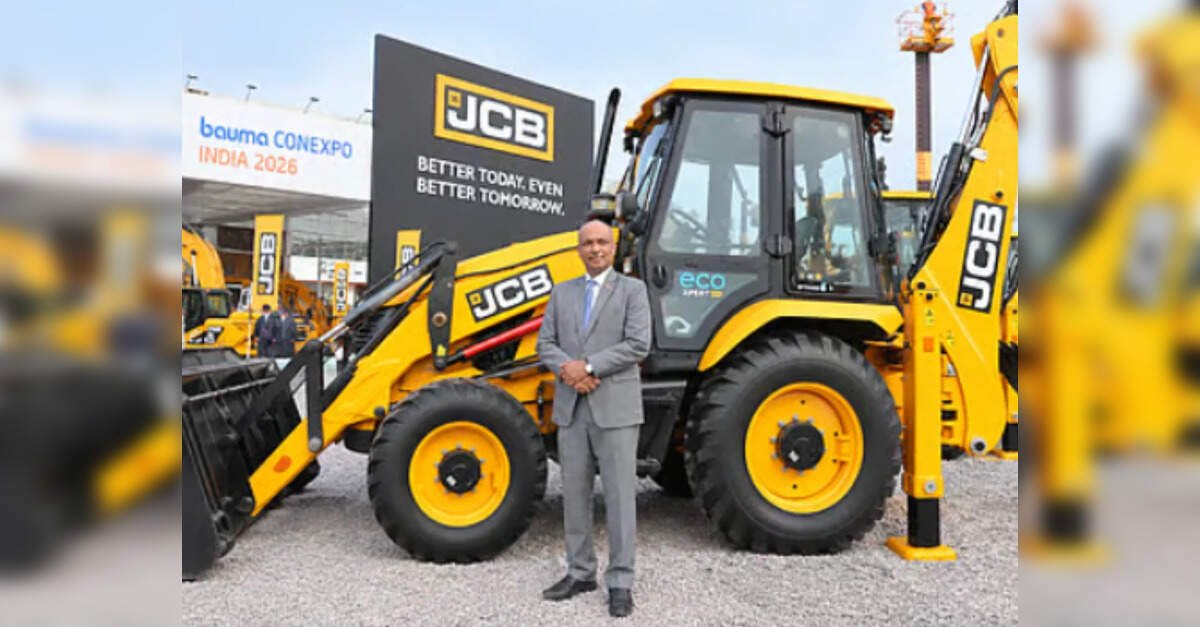
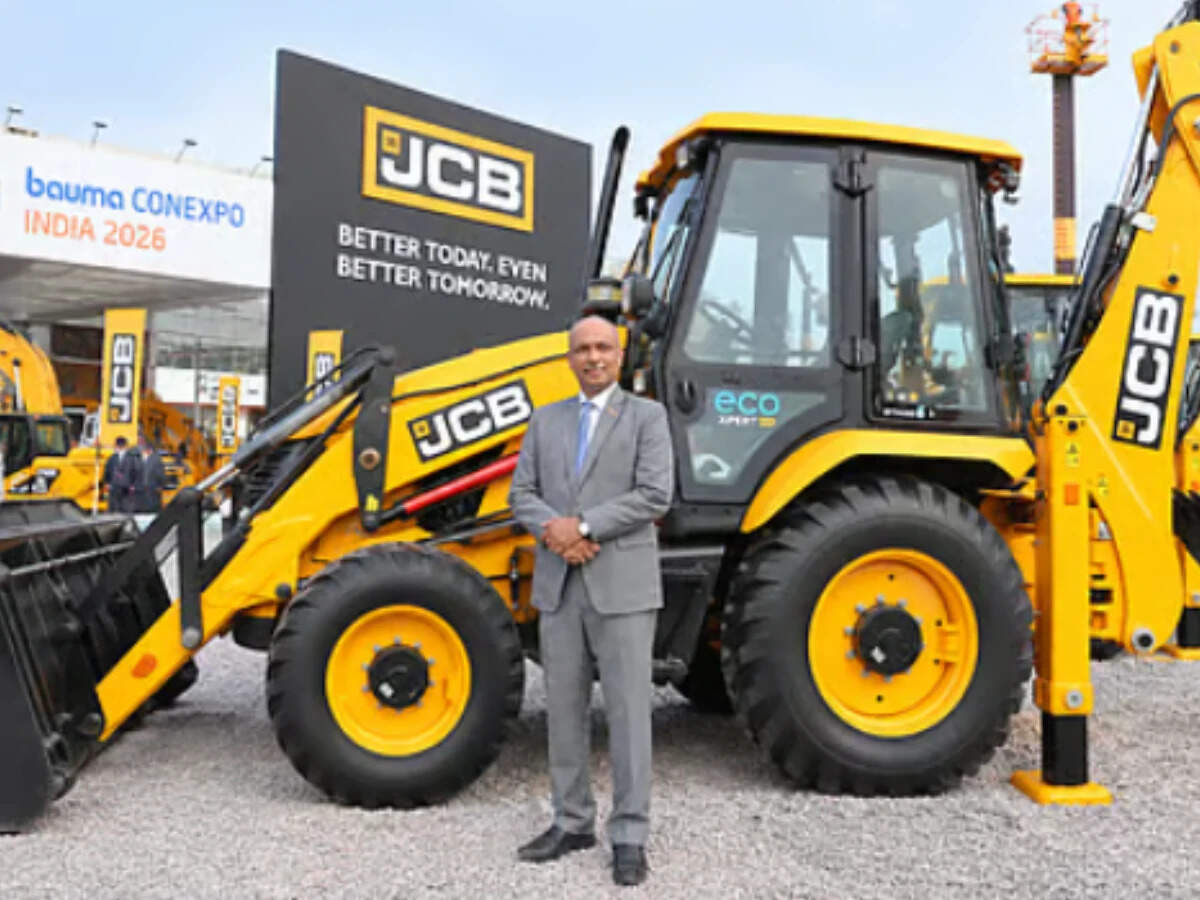
JCB India expects its exports to grow by 15-20% this year, while production is also expected to increase at a similar rate, said Deepak Shetty, managing director and managing director of JCB India.
“We expect that compared to last year, our exports will be at least 15-20 percent higher this year,” Shetty said during a media interaction at Bauma CONEXPO INDIA 2026. The company exported about 14,000 machines last year.
JCB’s biggest export market last year was the US, and Shetty said developed markets will continue to account for a significant portion of the company’s exports.
“I was walking the streets of Chicago and I was seeing JCB machines produced in India,” he said, adding that the company’s biggest exports this year would also go to developed markets.
JCB produces around 70,000 machines annually, according to Shetty, who expects production to increase by around 15-20 percent this year.
The company has 23 plants worldwide, six of which are in India. Shetty said the Indian operations have increasingly become a manufacturing and engineering base for products supplied to international markets.
Hydrogen for larger machines
Shetty said JCB expects different alternative powertrains to find applications in construction equipment, depending on machine size and operating conditions. “The smaller machines, the more compact machines that are used in urban India, would probably be more electric,” he said.
However, he sees hydrogen as a potential option for larger machines, especially when the infrastructure needed to produce and supply the fuel can be established locally.
“What we expect is that in the future, the bigger the volume, the bigger the machines will be hydrogen-based,” Shetty said.
JCB has already developed a hydrogen combustion engine, with the investment of around 100 million pounds in its development. Shetty said the engine has been certified in 11 European Union countries for commercial use.
In India, he said, the company is waiting for the supporting infrastructure to develop.
“As the infrastructure is created in the country through the National Hydrogen Mission… JCB is participating in this particular process,” he said.
“The engine we’ve already developed, the machine is ready. As the infrastructure comes out, we’ll be ready to ship the machines.”
Shetty said the application of alternative fuels would vary depending on operational environments. Although electric machines might be better suited for urban applications, the availability of electricity remains a consideration for equipment operating in rural areas.
“Seventy percent of our machines are sold in rural India,” he said, pointing to equipment used in road and water infrastructure projects where electrical infrastructure is not yet available.
JCB crosses 50% market share
Shetty said JCB has increased its share of the domestic construction equipment market, including products beyond its traditional backhoe business.
“We are very proud to say that one out of every two machines sold in India is a JCB machine. Now I can tell you that just over one out of every two machines sold in India is a JCB machine,” he said.
He also questioned the perception that the domestic excavator market is growing rapidly. According to Shetty, after excluding machines exported from India, the excavator market has remained around 20,000 machines.
At the same time, he said the markets for backhoes and wheel loaders have grown, while the newly created AgriMax segment could add about 1,200 machines to the market.
JCB sold its highest number of backhoes in India last year, Shetty said, and total equipment sales also hit a record level for the company.
The company also uses telematics to track machine performance. Shetty said JCB has telematics installed on more than 300,000 machines in India and has improved its backhoe fuel efficiency by nearly 50% over the past decade.