

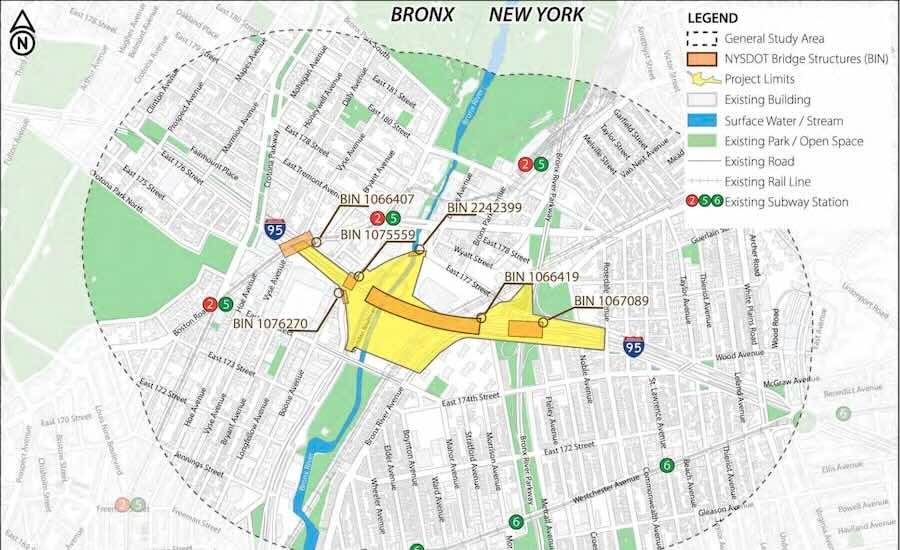
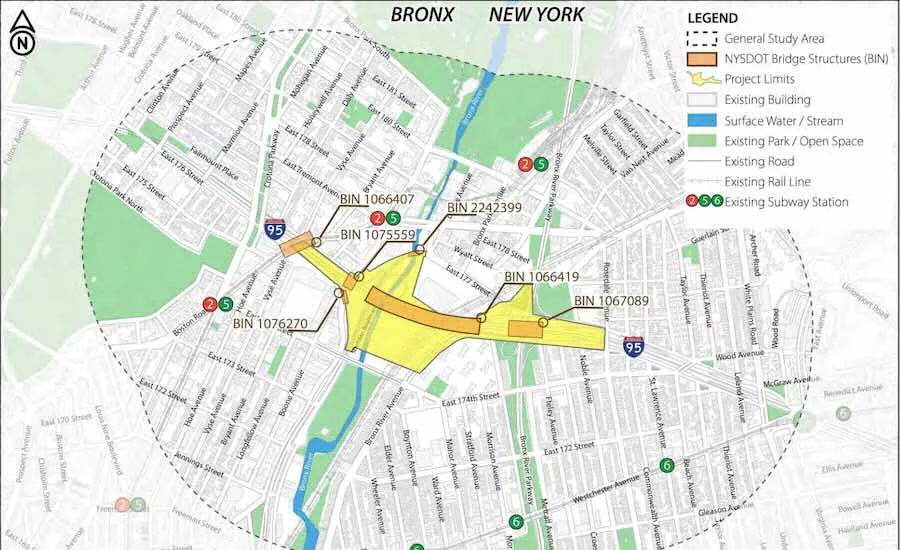
The New York State Department of Transportation is suspending plans to spend $900 million on a series of aging bridges in the Bronx. The Cross Bronx Bridges project would have upgraded five bridges that support a mile of the Cross Bronx Expressway, but also widened the six lanes of road they support, an expansion plan that drew criticism from Bronx community organizations.
Unable to reach an agreement with local organizers on what the project should look like is why the state agency abandoned the project, according to a statement. NYSDOT released in May.
“We’ve always said we understand that the bridges need to be repaired. The issue is how to reduce the damage to the local environment and the people who live here,” according to a statement from the Bronx River Alliance, a nonprofit organization dedicated to protecting the waterway. “For the state to choose to blame the Bronx for its own unwillingness to meet our basic need for a healthy future seems like a poor retelling of the history that got us here in the first place.”
The state agency first suggested upgrading those structures in 2018. The five bridges were built between 1947 and 1958 and are showing signs of age, with cracked concrete and weathered and impact-damaged steel.
From the first days, however, the State has wanted to widen the sections of the motorway supported by the bridges. According to a department report, more shoulder room and other changes to the CBE’s “non-conforming geometric design features” would help with crashes and road congestion. The freeway is one of the busiest in the country, carrying up to 150,000 vehicles a day through the South Bronx.
Over the past year, NYSDOT has been phasing out construction options. One set of proposed plans would have built an elevated traffic diversion structure parallel to the freeway, which would be demolished and replaced with a narrower shared-use lane or converted into a combination of bus, bicycle or pedestrian spaces. In August and October 2025, the NYSDOT announced that these plans were no longer on the table. “The feedback we received from the community made it clear that the use of a traffic diversion structure was a non-starter,” Commissioner Dominguez said in an agency statement at the time.
In late 2025, state DOTs returned with new options, including versions with and without pedestrian or bike lanes parallel to the freeway. Like the previous plans, these proposals also extended the CBE, either by 29 or 49 feet. In a comment on those designs signed by 41 organizations, including the Bronx River Alliance, the authors noted that NYSDOT had been unclear about how the widening would improve traffic or safety conditions and suggested the changes could be counterproductive. “Recent experiences of freeway widenings done in the name of ‘safety shoulders,’ as on the Bronx River Parkway, have had the opposite effect as intended, with drivers aggressively using the new space to travel,” they wrote.
The Bronx Council on Environmental Quality, a borough nonprofit environmental organization, was also disappointed by what it considered a substandard stormwater management plan. The organization also asked for possible green infrastructure or nature-based solutions to give more plant life to the area or block some of the road noise. The South Bronx has some of the highest asthma rates in the country, and tenants of the Bronx River Houses, a NYCHA complex near that mile-long stretch of freeway, have shared that residents keep their windows closed at all times because the local air pollution is so bad. The council never saw their requests taken seriously. “They could have been a lot more imaginative,” said Karen Argenti, the council’s corresponding secretary.
“The Cross Bronx Expressway 5 bridges are still in dire need of rehabilitation,” added Rafael Moure-Punnett, district manager of Bronx Community Board #6, in a statement. “We look forward to NYSDOT working collaboratively again [the] community to talk about federal investment in our neighborhoods to address the negative impacts of the Cross Bronx Freeway on Bronx residents.” One way or another, the state will have to return to the issue as it has pledged to monitor the bridges and make repairs.
