

Construction input prices rose 2.6 percent in May, pushing materials costs nearly 10 percent above year-ago levels and raising fresh concerns about project costs and contractor margins as tariffs, rising metal prices and rising energy costs feed into the construction supply chain.
According to an Associated Builders and Contractors analysis of U.S. Bureau of Labor Statistics producer price index data released June 11, overall construction input prices rose 2.6 percent for the month and were up 9.6 percent from a year earlier. Non-residential construction input prices rose 2.4% in May and 9.7% year-on-year.
Associated General Contractors chief economist Ken Simonson said the ABC figures are based on a producer price index that tracks inputs of goods into construction.
He pointed to broader BLS measures that include both materials and certain services purchased by contractors, which rose 1.7% in May and 8.1% year over year. A comparable index of new non-residential construction rose 1.8% for the month and 8.4% from a year earlier.
The increase comes amid a broader resurgence in producer inflation. The BLS reported that its final demand producer price index rose 1.1% in May, up 6.5% from a year earlier, the largest annual increase since November 2022. Nearly 80% of the monthly increase was attributed to higher energy costs.
“Construction input prices rose again in May and are now up nearly 10% year-on-year,” ABC chief economist Anirban Basu said in a statement.
“Oil prices, pushed higher by the conflict with Iran, made a significant contribution to the increase in overall material prices, but the biggest concern is the continued growth in the prices of tariff-hit inputs such as iron, steel and copper,” Basu added.
Looking for quick answers on construction and engineering topics?
Try Ask ENR, our new intelligent AI search tool.
Ask ENR →
Metals and energy drive the increases
The strongest price increases continue to occur in materials widely used in industrial, infrastructure and data center projects.
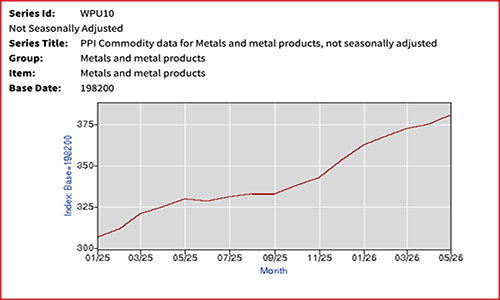
The U.S. Bureau of Labor Statistics producer price index for metals and metal products rose from about 307 in January 2025 to nearly 380 in May 2026, reflecting sustained increases in construction-related materials such as steel, aluminum and copper. Associated builders and contractors reported that copper wire and cable prices rose 24.2% year over year in May.
Chart: US Bureau of Labor Statistics
Copper wire and cable prices rose 7.3% in May and were up 24.2% from a year earlier, according to ABC. Iron and steel prices rose 1.4% for the month and 7.0% year-on-year, while hot-rolled steel bars, plates and structural shapes were 10.0% above year-ago levels.
Federal producer price data points to similar pressure on metals markets. Steel products rose 6.7% year-over-year, while copper and brass mill shapes rose 26.8% and aluminum mill shapes rose 48.8%.
Simonson said the latest escalation reflects both geopolitical and commercial pressures.
“Clearly, the conflict in the Middle East is responsible for the 19.9% monthly increase and 105.9% year-over-year increase in diesel fuel PPI, which in turn contributes to the increased truck PPI and fuel surcharges that many contractors are now paying for deliveries,” he told ENR in an email.
Simonson added that the tariffs have contributed to higher prices for aluminum and copper products, as well as fabricated structural metal components. Truck freight prices rose 17.3% year over year, according to BLS data, underscoring how higher energy costs are filtering through construction supply chains.
The acceleration comes at a time when construction demand remains uneven.
ABC reported in May that contractor backlogs rose to 8.8 months, the highest level in 10 months, largely due to continued data center investment. Contractors also remained generally upbeat about sales, staffing and profit margins, despite what Basu described as escalating emerging materials prices.
This optimism contrasts with weaker spending data elsewhere in the market. Private spending on nonresidential construction fell for a fourth straight month in January, according to an earlier ABC analysis, reflecting a slowdown in manufacturing megaproject activity as several semiconductor projects moved toward completion.
Outside of data centers, Basu said few sectors are generating enough momentum to offset this slowdown.
Contractors also face labor cost pressures. Simonson noted that average hourly earnings for construction production and non-supervisory workers rose 5.0% from May 2025, compared with a 3.6% increase for the private sector overall.
Combined with higher transportation costs and continued escalating metal prices, these pressures are adding strain to construction supply chains, even as contractors maintain a generally positive outlook.
