

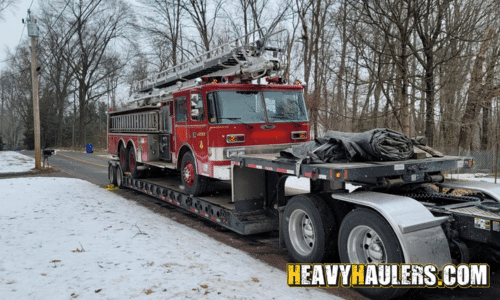
The winter season can be very difficult for heavy haulage operations. Reduced traction, limited visibility and extreme cold can pose significant risks to drivers, cargo and equipment. Although Heavy Haulers drivers are trained and licensed to demonstrate skills, driving heavy trucks on icy and snowy roads can pose the greatest risks if heavy hauling safety protocols are not observed.
The need for robust winter emergency response plans cannot be overstated. That’s why it’s important to understand common transportation emergencies, recognize the key components of a winter emergency response plan, and emphasize the importance of winter emergency training and drills.
Recognition of common winter transport emergencies
There are several challenges that transporters face when driving on icy and snowy terrain. Knowing about these unsafe conditions makes drivers even more cautious. Some of these winter transportation challenges include:
Skidding and loss of control
Driving in bad winter weather can be risky due to skidding and loss of control. Snowflakes, mud, sleet, and frozen puddles make roads even more slippery, making it harder for tires to grip the road. Even experienced commercial truck drivers struggle to maintain control when winter road conditions are unfavorable.
Mechanical breakdowns in the cold
Low temperatures can damage the mechanical components of heavy transport equipment. Engine failure, reduced battery power, unresponsive equipment, frozen brakes and other mechanical failures can occur during freezing temperatures.
Cargo security issues
Winter conditions can cause cargo to become unstable or shift, increasing the risk of cargo damage and accidents. Unevenly distributed or improperly secured cargo can cause your vehicle to lose balance or cause cargo to spill, posing a danger to other drivers and the public.

Key components of a winter emergency plan
Whether you’re a novice driver or an experienced driver, winter driving can be dangerous if you’re not properly prepared. The unexpected can happen, so taking extra precautions and preparing yourself and your team for winter conditions is a good idea. Consider these winter emergency response plan components to help you be prepared for winter transportation conditions.
Immediate communication protocols
Effective communication is a key component of any emergency response plan. Establishing immediate communication protocols will ensure smooth transport operations between the office team, the driver and the customer. Procedures for reporting emergencies should be clearly defined and drivers should have access to adequate and reliable communication devices.
First aid measures on site
In the event of an accident, on-site first aid measures can help minimize injuries. All drivers and support staff should be properly trained to administer basic first aid and be provided with first aid supplies as part of winter emergency response plans.
Equipment recovery and cargo protection
In the event of an accident during the winter, quick recovery of equipment and cargo protection measures are vital. An effective emergency response plan should outline the procedure for protecting the cargo and recovering the equipment. In addition, it should address cargo securing issues and ways to mitigate environmental impacts, such as the spillage of hazardous materials or fuels.
Training and drills for winter emergencies
Heavy Hauler drivers and other logistics experts should participate in routine winter emergency training, exercises and drills. This response plan should include:
Simulation of real world scenarios
Training and exercises prepare drivers and other transportation agents to respond effectively to winter emergencies. Simulating real-world scenarios will help staff practice their roles and responsibilities in a controlled environment. The simulation may include exercises to deal with cold-related equipment failures, skidding problems and cargo safety.
Continuous training updates
Winter rules and conditions may change over time. In addition, new ways to deal with winter transportation emergencies continue to evolve. That’s why ongoing training updates are essential to keep staff informed and prepared. Training should go beyond emergency response procedures and include winter driving techniques, cold weather equipment care and maintenance, and up-to-date safety standards.
Importance of team coordination
Winter emergency response requires the combined efforts of multiple team members, from the dispatch team to the driver, support staff and first responders. Team coordination is essential to ensure a smooth and effective response. Regular training should emphasize the importance of teamwork and communication.
Heavy transport in winter comes with major challenges, such as skids, mechanical failures from the cold, and cargo security issues. Understanding common winter transportation response plans can help mitigate these risks and promote safety. Additionally, key components such as immediate communication protocols, on-site first aid measures, and equipment recovery procedures should be well defined in the winter emergency response plan.
At Heavy Haulers, we prioritize safety and preparedness during winter hauling operations. We implement a comprehensive emergency response and invest in training and drills to ensure our staff and your cargo are safe.
