

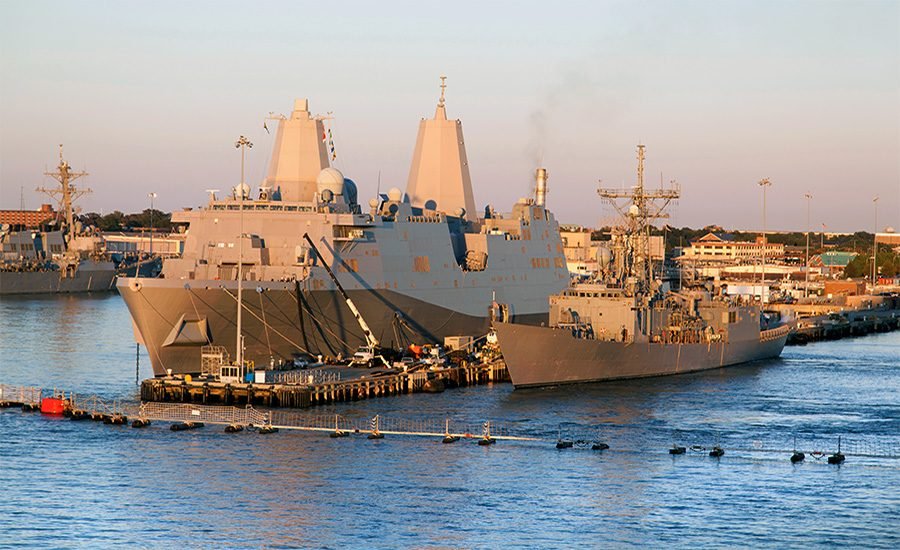
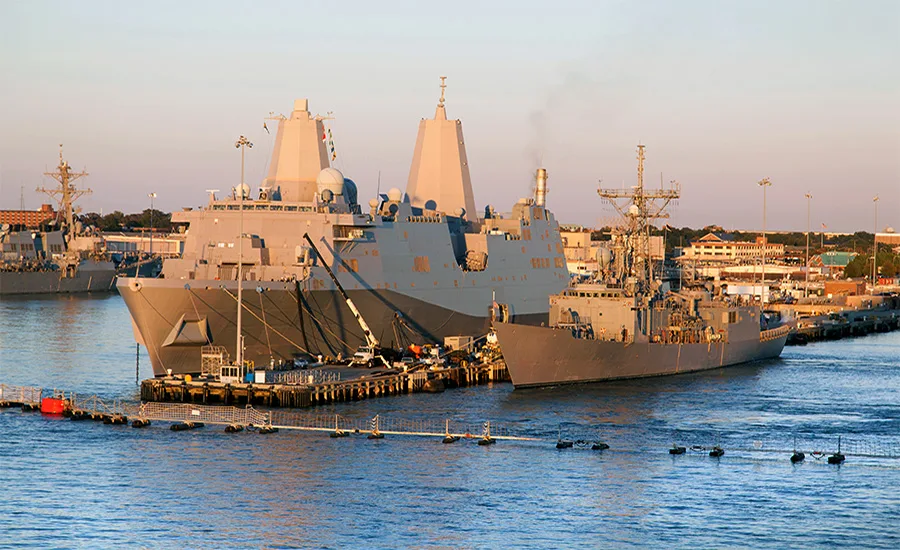
On July 22, the US House of Representatives passed a $1.15 trillion fiscal defense authorization bill for 2027 that authorizes $28.6 billion for military construction and family housing.
Lawmakers approved the National Defense Authorization Act, HR 8800, by a largely party-line vote of 216-212 after two days of debate and amendment votes. The measure now moves to the Senate, where lawmakers have yet to begin considering their own version after failing to advance the bill earlier this month.
While the annual defense policy bill is best known for authorizing weapons programs and military payments, this year’s House measure goes far beyond the traditional military buildup. It includes provisions affecting installation services, energy resiliency, shipyards, munitions plants, advanced manufacturing, and strategic supply chains that collectively support the nation’s defense infrastructure.
House Armed Services Committee Chairman Mike Rogers (R-Ala.) said these investments are essential to restoring military readiness.
“Peace through strength doesn’t start on the battlefield, it starts in our factories, depots and shipyards,” Rogers said. “This bill reflects our commitment to rebuilding that base.”
Like previous NDAAs, the legislation authorizes programs and establishes policies, but does not provide funding. Congress must still enact separate appropriations bills before authorized projects and programs can move forward.
Military construction expands beyond bases
The legislation would authorize $1.146 trillion in total, including $1.102 trillion for the US Department of Defense and $41.4 billion for the US Department of Energy’s atomic energy defense programs. Includes $28.6 billion for military construction and family housing.
Looking for quick answers on construction and engineering topics?
Try Ask ENR, our new intelligent AI search tool.
Ask ENR →
The bill authorizes construction projects in the Army, Navy, Air Force, Marine Corps and defense agencies while expanding authorizations from selected prior years and continuing investment in military family housing. The Congressional Budget Office estimates that the military construction authorization is about 45% above enacted fiscal 2026 levels.
House lawmakers also approved amendments that could reshape how the Pentagon prioritizes future infrastructure investment.
One directs the Department of Defense to inventory water and wastewater systems that are more than 60 years old, estimate replacement costs, and prioritize facilities that pose the greatest risks to preparedness and public health.
Another requires the department to identify and prioritize military construction and logistics projects in the Pacific Islands based on projected operational requirements through 2040. A third directs the Pentagon to evaluate the broader use of intergovernmental support agreements for certain smaller military construction projects to determine whether greater reliance on state and local partnerships could speed project delivery.
Beyond construction planning, the legislation expands the Pentagon’s focus on facility energy resiliency.
It incorporates nuclear power into the Department of Defense’s energy policy, modifies a Navy installation nuclear power pilot program, and establishes a transportable nuclear microreactor demonstration within the US Indo-Pacific Command. The accompanying committee report also emphasizes installation microgrids, grid resiliency, and electrical infrastructure serving critical military installations.
The environmental provisions also expand congressional oversight of per- and polyfluoroalkyl substances, or PFAS. An approved amendment requires the Defense Department to evaluate available destruction technologies, develop a pilot program and expand reporting on cleanup activities at military installations.
Industrial capacity takes priority
The House measure also seeks to strengthen the U.S. military’s logistics and suppliers, with provisions establishing planning requirements for public and private shipyards, ammunition plants, depots, advanced manufacturing facilities and the domestic supply chains that support them.
Among other measures, the bill authorizes multi-year procurement for major naval programs and directs the Navy’s updated strategies for maritime investment in the industrial base and sustainment of surface ships. It also expands direct procurement authority for defense industrial base facilities, while requiring new assessments of production bottlenecks affecting munitions manufacturing.
The bill directs the Pentagon to determine what facility improvements, production capacity and capital investment would be needed to substantially expand munitions manufacturing. The findings could help guide future investments in government-owned munitions plants, production lines and supporting industrial infrastructure.
Rogers said the sustained procurement and long-term demand are intended to give manufacturers confidence to expand production capacity.
“We are giving the industry the security it needs to invest, expand and produce faster,” he said. “We resurrect our organic industrial base by improving conditions in our depots, arsenals and shipyards.”
The legislation also encourages wider use of advanced manufacturing technologies while accelerating the qualification of domestic and allied suppliers of strategic materials aimed at reducing reliance on foreign-controlled supply chains. Many of these initiatives would ultimately require upgrades to government-owned production facilities, utility systems, and specialized manufacturing infrastructure.
House Democrats overwhelmingly opposed the measure, citing its cost and amendments passed during floor debate.
The NDAA bill now heads to the Senate, where lawmakers have not begun debate on their version, S. 4784, after a July 14 cloture vote on the motion to proceed failed to get the 60 votes needed. A Senate-approved version would go through a reconciliation process before advancing to a presidential signature. Separate appropriations legislation will then determine which authorized projects and programs ultimately receive funding.
