

As construction costs remain high and public sector owners seek greater value from existing assets, Minneapolis-area AEC professionals are increasingly focusing on facility reinvestment, geothermal energy systems and community-supported long-term infrastructure planning.
According to Joel Dunning and Brady Meister, both with Wold Architects and Engineers, these trends are affecting project decisions in the Twin Cities and are expected to continue to influence the market well into next year.
“One of the biggest conversations we’re having with customers right now is around reinvesting in existing facilities,” says Dunning. “Rising construction costs have strengthened the value of buildings communities already own. Instead of immediately looking for new construction, many homeowners are finding that additions, renovations and even complete interior remodeling can extend the life of a facility while addressing operational deficiencies.”
The trend is particularly evident among school districts and government agencies, where flexible work arrangements have created opportunities to complete improvements more efficiently.
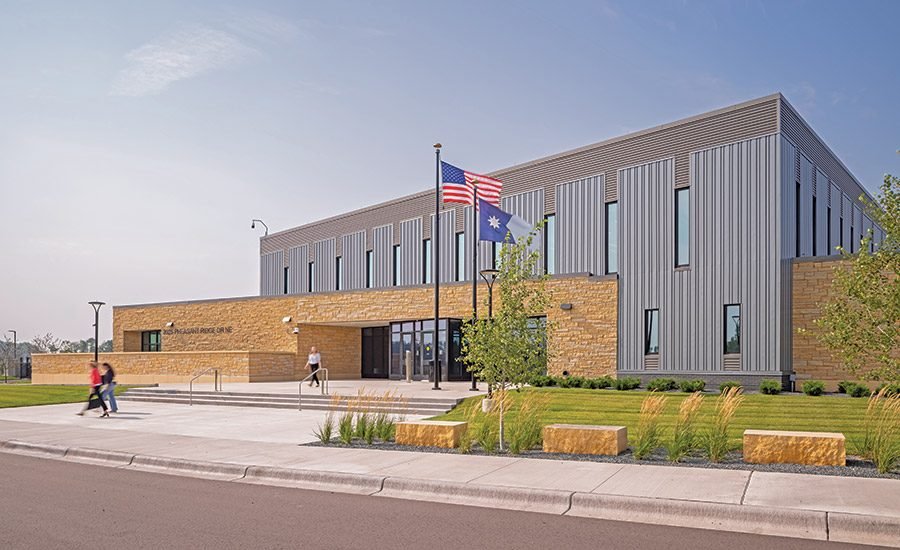
“The ability of some staff to work remotely has changed the way certain projects can be delivered,” says Dunning. “In some cases, facilities can remain operational with fewer construction phases, which shortens schedules and helps reduce the impact of rising costs. We’ve seen this strategy work successfully in projects like the Woodbury Public Safety Campus improvements.”
Wold is currently renovating and expanding the public safety campus in Woodbury, Minn.
The project is expected to improve operations by co-locating emergency services, police and fire to strengthen coordination, improve efficiency and support long-term operational resilience for both first responders and the community they serve.
Another important issue generating attention throughout the Minneapolis construction market is the growing adoption of geothermal technology.
“Advances in geothermal systems make them a much more realistic option for existing schools and public buildings,” says Meister. “New submerged closed-loop heat exchanger systems can interact with aquifers and achieve geothermal performance with far fewer wells than traditional systems. This is especially important in locations where available space is limited.”
The technology is becoming increasingly attractive as public owners look for ways to improve energy efficiency, reduce long-term operating costs and modernize aging mechanical infrastructure.
“For many school districts, geothermal is not just an energy discussion, but part of a larger infrastructure renewal strategy,” says Meister. “While older buildings often have strong bones and lasting community value, their mechanical systems need modernization to meet today’s expectations. Geothermal offers long-term operational benefits, system longevity, reduced maintenance and consistent comfort, making it an attractive option for districts focused on management and performance.”
Beyond energy efficiency, Dunning and Meister identify community support for public investment as an important factor driving activity across the region.
“Today’s communities are looking for buildings that are durable, flexible, energy efficient and financially responsible.”
—Brady Meister, Engineering Practice Leader, Wold Architects and Engineers
“We continue to see communities willing to invest in public facilities when there is a clear need and a well-developed plan,” Dunning says. “Recent successful school funding measures, including the one passed by Wayzata Public Schools, demonstrate that residents understand the long-term value of investing in educational and civic infrastructure.”
“When projects are connected to a thoughtful long-term vision and there is transparency about how the facilities will serve the community, voters are still willing to support these investments,” says Meister.
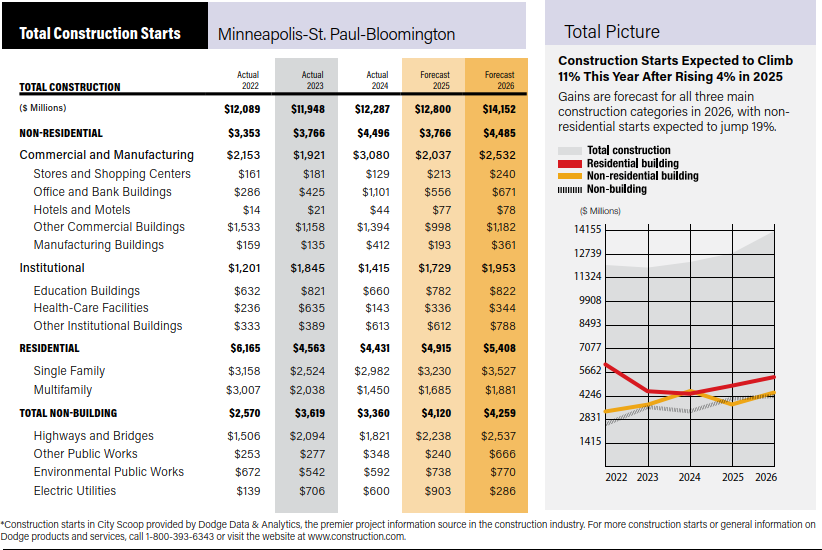
Overall, the Minneapolis construction market remains active, although project owners are taking a more deliberate approach to planning and execution.
“We’re seeing clients spend more time assessing existing conditions and validating project scope before committing to major investments,” says Dunning.
Looking ahead, Dunning and Meister agree that reinvesting in facilities and containing energy costs will continue to be important for property owners.
“Communities today are looking for buildings that are durable, flexible, energy efficient and financially responsible,” says Meister.
