

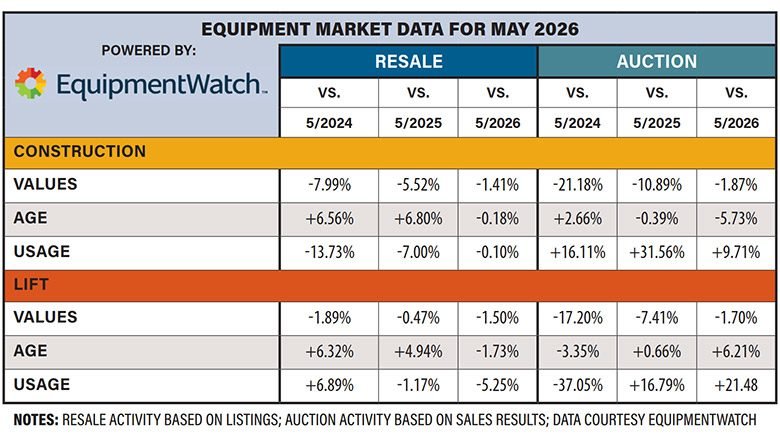
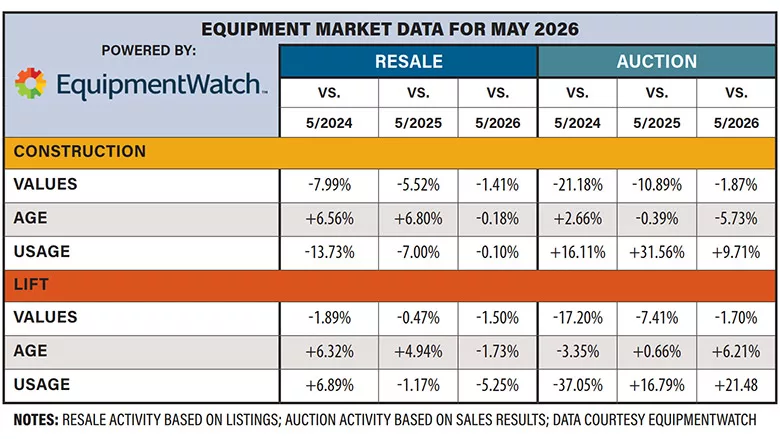
The broader forces at work in construction, from the data center construction boom to volatility in the oil and gas markets, are not having a significant impact on used equipment prices, according to the latest figures from industry analyst EquipmentWatch. Prices have fallen slightly in recent years, but normal seasonal price trends and other expected changes are being observed, according to sales analyst Brendan Gallagher.
“Prices follow the trend of previous years in the first half of the year: newer equipment comes on the list driving up prices, then adjusts mid-year,” he says. The year-over-year decline in used iron values, down 5.52% at resale and 10.89% at auction, could reflect a slight reduction in demand in some sectors for the 2026 construction season, but it’s not too out of the ordinary, says Gallagher, who adds that these trends are reflected in both the construction equipment and lift equipment categories in both construction tracks and secondary equipment. channels
Ownership costs related to rising diesel prices tend not to be reflected in used channels, but Gallagher says it could lead to an increase in rental prices in the coming months. “Fuel prices are usually included in hourly rental rates and, for construction projects, are included in bids as part of the total cost.”
OEMs have been navigating some rough waters recently with changing fee requirements and other uncertain policies, but demand is offsetting the unexpected costs in some cases. Deere & Co. reported strong numbers for its construction and forestry division last month in its second-quarter earnings call, with a notable year-over-year increase in net sales of 29%.
“Construction industry fundamentals remain favorable,” Chris Seibert, Deere’s manager of investor communications, said on the May 21 call. “Healthy Client Calculations [are] supported by infrastructure and large project expenditures that more than offset the softness in residential construction.”
While the impact of the tariffs has already been in OEM planning for 2026, the rollback of the tariffs following a February court ruling invalidating some of the surcharges has been an unexpected headwind for some manufacturers. Deere, in particular, is taking the refunds as an opportunity to make further adjustments to its supply chain, ramping up relocation operations to avoid future charges. The manufacturer still anticipates a $1.2 billion charge in 2026 related to tariffs.
“To help manage the impact of the tariffs, we continue to have teams across the organization working diligently to quantify exposures and identify mitigation opportunities,” said Brent Norwood, Deere’s senior vice president and chief financial officer. “Overall, we believe we are executing well on these opportunities and are confident in our ability to manage the current rate environment effectively.” Norwood added that Deere manufactures 80% of its finished products in the US, with 75% of components sourced domestically.
Tariff pressures on imported equipment eased slightly this month as the White House announced that tariffs on certain types of equipment imports would be reduced from 25% to 15%. Covered equipment includes certain types of forklifts, as well as excavators, scrapers, graders, and other earthmoving equipment. The new policy went into effect on June 8.
Looking for quick answers on construction and engineering topics?
Try Ask ENR, our new intelligent AI search tool.
Ask ENR →
