

With the rise of artificial intelligence and industrial manufacturing pushing utilities to keep up with record energy demand, U.S. federal and state governments are expanding how nuclear power can fit into the energy mix, funding rapidly advancing technologies and offering incentives to accelerate development and de-risk investment.
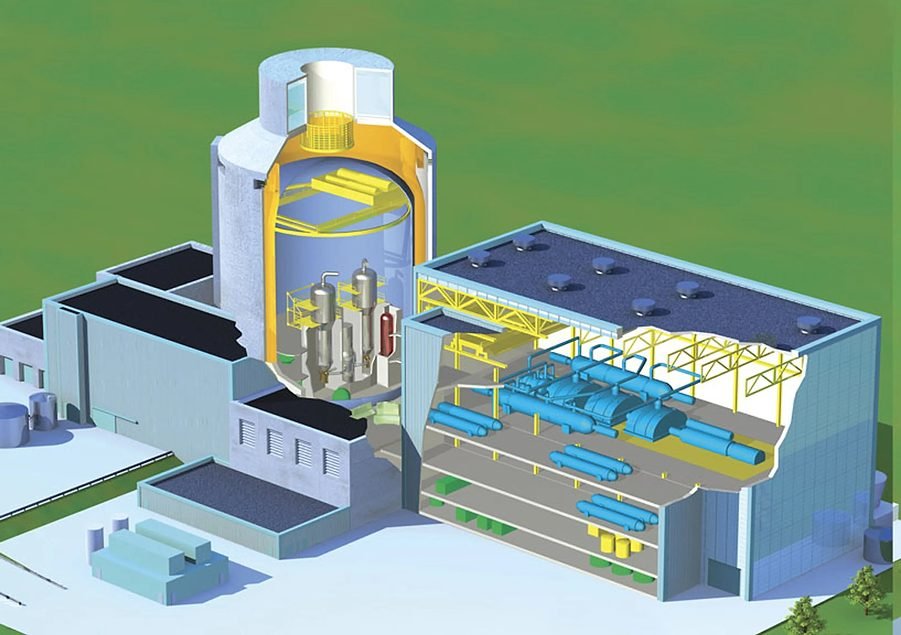
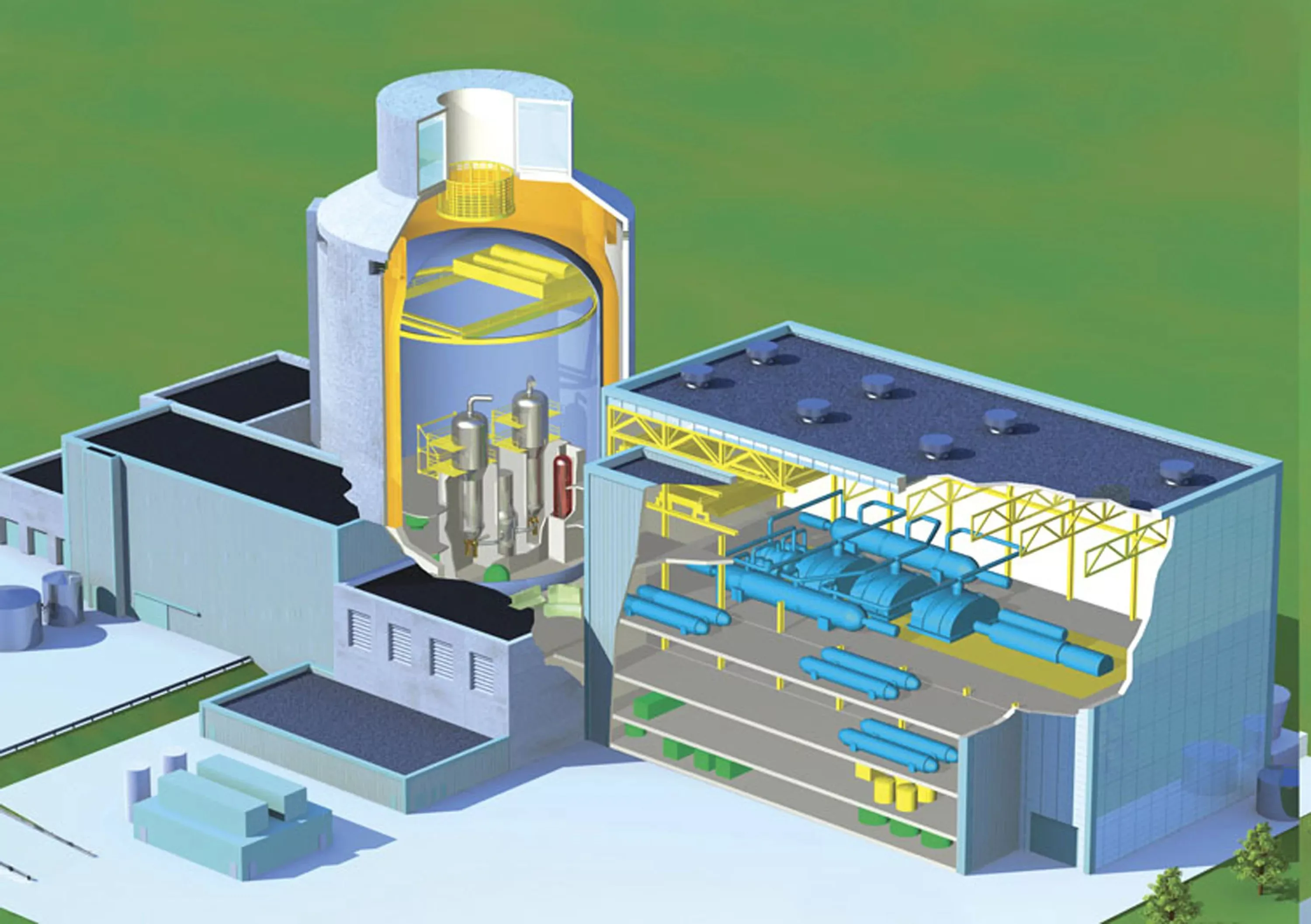
Continuing its crusade to cement America’s AI dominance, the Trump administration said on June 23 that it will provide loans totaling $17.5 billion to utilities and other energy companies to support the development of 10 nuclear reactors at five sites. The U.S. Department of Energy said it will make up to five loans, focusing on the AP1000 design that has long been the U.S. standard for large commercial reactors.
The agency said Westinghouse and a utility or company partners will jointly own each project and must fully commit project capital ($1 billion in total per 1.1 GW project) upfront to access the loan funds.
The DOE also said the company, which manufactures the AP1000 design, will partner with up to five eligible U.S. utilities and energy companies to purchase long-lead component elements “at a fixed price.” According to the agency, loans for the purchase of bulk equipment will boost the nuclear sector’s efforts to restart and build new plants with the necessary financing, create new supply chain efficiencies and shorten project deployment times by up to three years.
The last two U.S. nuclear units using the AP1000 design were completed in 2023 at Georgia Power’s Vogtle plant, but the project struggled with planning, supply chain, the global pandemic and other challenges, Energy Secretary Chris Wright said. He said the AP1000 design is “robust and solid” and worth replicating.
“It’s another reason why we’re working on building 10 plants,” he said, referring to the administration’s overall goal. “Think about the supply chain for this, and the same team can create volume and in multiple locations.” Wright stated that the more standardized approach “will bring a lot of construction experience,” adding that the cost and schedule of the new plant “will exceed what was done at Vogtle.”
Purchases for each project “will be staged based on the timing of capital commitments and other relevant factors,” according to the announcement. Westinghouse has signed letters of intent with seven potential partners, each with project sites identified but not publicly disclosed. “The United States has taken the biggest step toward a nuclear renaissance in decades,” said Thomas Hochman, director of energy at the Foundation for American Innovation, in a social media post.
Looking for quick answers on construction and engineering topics?
Try Ask ENR, our new intelligent AI search tool.
Ask ENR →
Driving standardization
according to Market research firm based in Washington, DC Capstone, regulated utilities best positioned to access DOE loans include Dominion Energy, DTE Energy, WEC Energy Group, Public Service Enterprise Group and Entergy Corp. More details about the recipients of the loans are expected to be known by the end of the year.
The loans would help companies acquire items such as reactor vessels and steam generators, which can take years. “The long-term items funded by these loans are completely standardized to the point of being interchangeable between projects,” Julie Kozeracki, acting director of investments for the DOE loan office, told the media. The agency expects the program to expand the manufacturing capacity of U.S. nuclear power plants, said Greg Beard, head of the loan financing program. Some hyperscalers may even take stakes in nuclear power plant projects, he added. “We are confident these projects will be cost-effective for utility shareholders, ratepayers and hyperscalers,” Beard said, adding that a competitive process to select engineering, procurement and construction firms is also intended, but without details. Wright said hyperscalers are expected to sign long-term purchase agreements in advance for financial stability.
Uncertainties about the loan program include how much funding the DOE will ultimately cover for certain components, the utilities and companies that will participate, the location of the reactors and any impact on the start of planned construction.
Expansion of the nuclear footprint
The announcement advances President Donald Trump’s 2025 executive orders that direct the deployment of 300 GW of new clean nuclear capacity by 2050 and have 10 large reactors under construction by 2030. It also follows an $80 billion federal settlement with Westinghouse’s owners, Canada-based companies Cameco and Brookfield Asset Management, under which the DOE would help finance an exchange and permit of funding for DOE asset management. 20% share of future profits. The federal goal is to grow the US nuclear footprint from about 100 GW to 400 GW by 2050.
But concerns remain. The loans are “a drop in the bucket compared to the likely total cost of the ten AP1000 reactor project,” Edwin Lyman, director of nuclear energy safety for the Union of Concerned Scientists, told Utility Dive. The total cost could approach $200 billion, he said, adding that “none of these potential projects are backed by an actual construction contract.” He asked if the component orders “will have to be canceled if the actual projects do not materialize.”
Meanwhile, more states are actively reconsidering new or expanded nuclear power. The DOE says more than 25 states have passed supporting legislation, including small modular reactors (SMRs) and other advanced next-generation technologies. On June 24, Arizona Public Service, the Salt River Project and Tucson Electric Power announced they would add new generation to the Palo Verde Power Plant, with some of its units in service for 40 years. Utilities said a site study would be completed in six months. Texas also wants more advanced nuclear, with applications being sought for a $350 million nuclear construction fund.
New York this month released a draft of its plan to develop 5 GW of new nuclear power statewide, including at least 1 GW upstate. According to the New York Power Authority, eight upstate communities and 23 developers have expressed interest in the effort, though a moratorium remains in place in some parts of the state and lawmakers could weigh new proposed bans. New Jersey Gov. Mikie Sherrill (D) signed legislation shortly after taking office in January that removed an obstacle discouraging new nuclear capability. “For costs to come down, we need more energy supply. New Jersey is well-positioned to be a leader in next-generation nuclear power … and we’re open for business,” he said. Two plants in operation provide about 42% of the state’s energy.
“We want 24/7 power. Where is the intersection between 24/7 power and the ability to scale?” Mike Kramer, Constellation’s vice president of data economy strategy, told attendees at a Reuters energy conference in New York City on June 23. “We won’t see winners between renewables, nuclear and gas. There will be many combinations.”
Brian Savoy, chief financial officer of Duke Energy, described as the largest regulated nuclear utility in the United States, noted that strong nuclear support from governments in countries such as Poland and China offer “the right amount of risk sharing.”
Meanwhile, a DOE pilot program to contract with 10 private companies to build and operate advanced experimental reactors outside national labs is fast approaching a July 4 deadline to have at least three facilities reach “nuclear criticality.” So far, two say they’ve passed that milestone: Antares Nuclear, a California microreactor developer, and Valar Atomics, which is now building an advanced reactor.
“Two reactors have gone critical, for the first time in 40 years,” Wright told the audience to Reuters. “We’re hoping for the third one by the Fourth of July,” though he wouldn’t name any companies that would do so.
What CANDU can do
Also, despite federal support for the AP1000 nuclear design, AtkinsRéalis, developer of the core design for Canada’s CANDU reactor, which is cooled by pressurized heavy water, said on June 24 that it has begun the process for licensing by the US Nuclear Regulatory Commission. “As the United States enters a new chapter in its civil nuclear program, AtkinsRealis is uniquely positioned, as the steward of CANDU technology, to help advance the nation’s ambitious energy policy using proven, low-cost reactor technology with a world-class reputation,” said the firm’s president and CEO, Ian Edwards.
Canada also announced in recent days an updated national nuclear energy strategy, a long-term vision of nuclear energy potential that includes plans to deploy up to 10 new large-scale reactors by 2040 along with two projects underway in Ontario. The plan calls for at least one reactor outside Ontario to be operating or under construction by 2035, and a microreactor demonstrated by 2035 and deployed to a rural community by the late 2030s.
The country would ensure that by 2030 there is a “modernized and cost-competitive” CANDU reactor design for domestic use and potential export. “We are moving at speeds not seen in generations to do great things and build on pre-existing strengths to become a modern energy superpower,” Energy and Natural Resources Minister Tim Hodgson said in a statement.
