

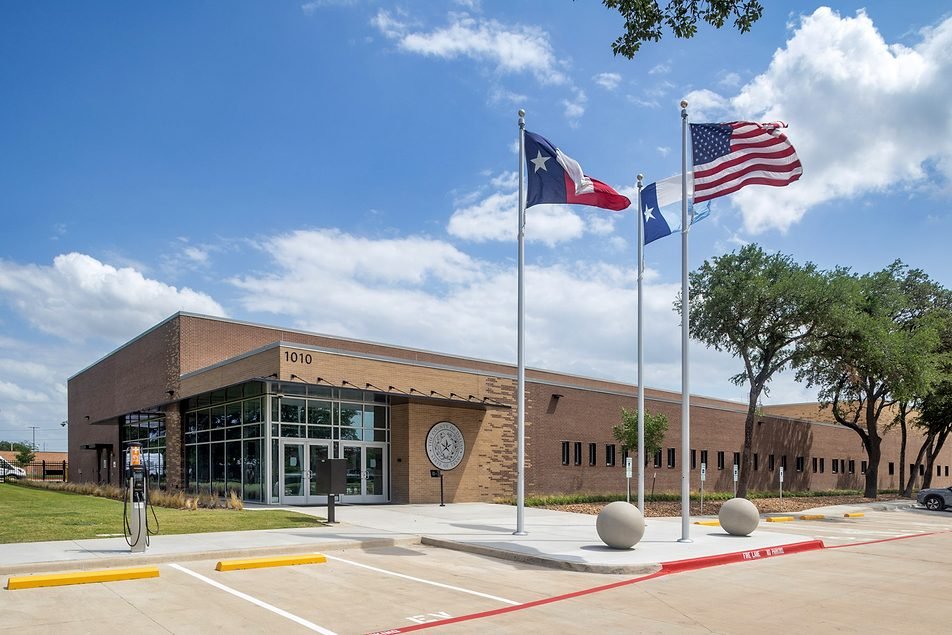
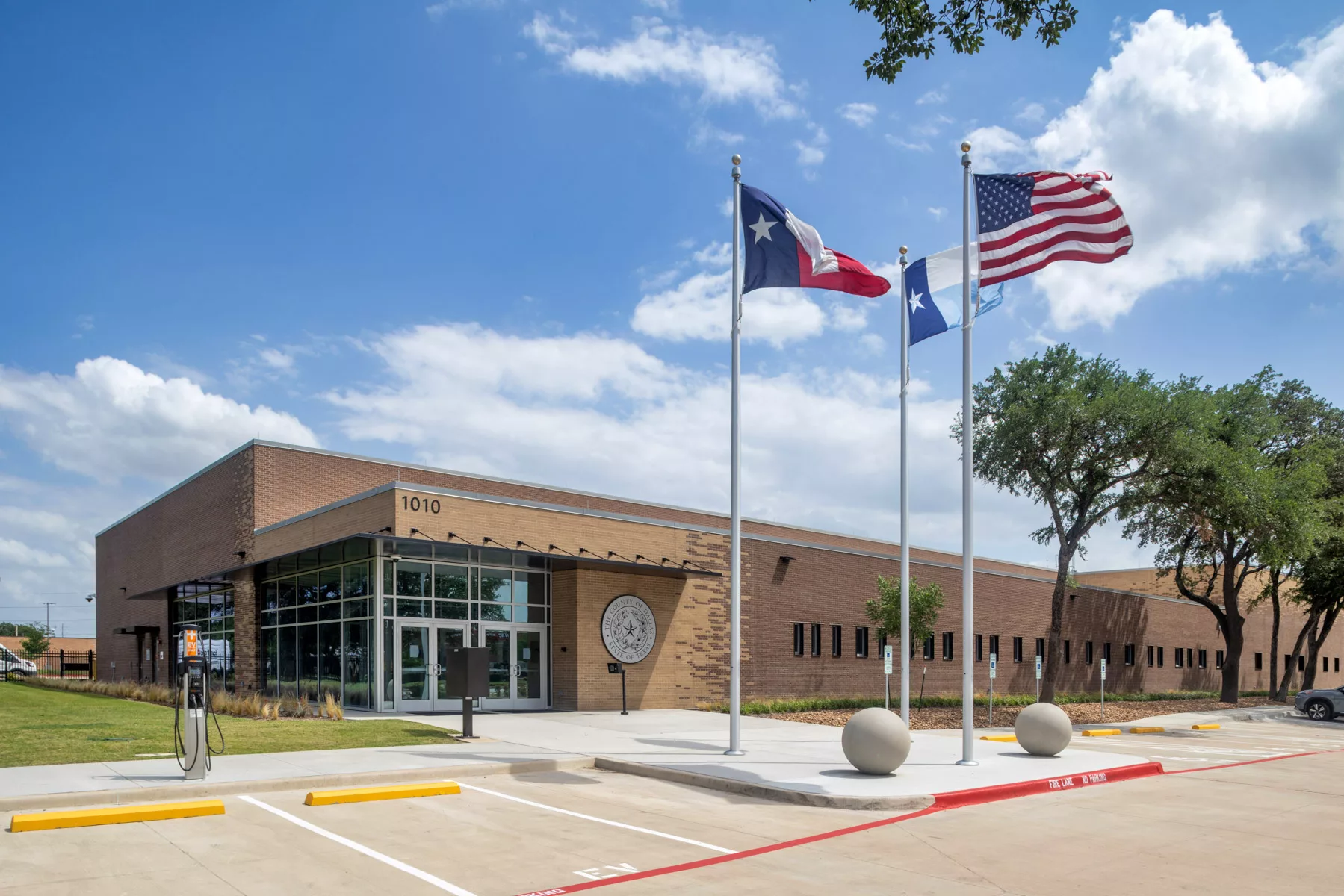
In mid-July, the FIFA World Cup will unfold in North Texas. What remains is the building that helped keep the joint operation together: the new Dallas County Emergency Operations Center, where nearly 200 federal, state and local personnel coordinate public safety for one of the largest events the region has ever hosted.
The $26.2 million, 39,000-square-foot facility in Dallas is the county’s permanent EOC, built by general contractor Azteca-Omega Group with developer Kaizen Development Partners and dedicated June 10 after 18 months of construction. KAI provided architecture, interior design, MEP and fire protection engineering, and CBRE and McKissack & McKissack acted as the owner’s representatives. The tournament, which will extend into mid-July with games at AT&T Stadium in Arlington, is just the building’s first mission.
It replaces a makeshift operation adapted inside a manufacturing and distribution warehouse, a configuration that offered the security power but little resilience the county wanted for a center that coordinates emergency management in 31 cities and 2.6 million residents, says Derwin Broughton, KAI’s vice president and senior director, who served as project executive and architect.
KAI designed the structure to ICC 500-2020 storm shelter standards, qualified to withstand wind loads and debris carried by winds of 250 mph. Redundant data, telecommunications, mechanical, electrical and plumbing systems back up every critical function, and the building is designed to operate independently for at least five days.
“This facility was designed as the nerve center for Dallas County’s emergency operations, bringing decision makers together in a purpose-built environment that supports clarity, speed and decisive action during critical events,” says Broughton.
A key design challenge shaped the site: The county needed outdoor chillers, but air-cooled units need open airflow and can’t be completely enclosed. KAI addressed this with a covered, storm-rated equipment yard that protects chillers and backup generators. “Working closely with the client, we implemented redundant heating and cooling systems in the yard to ensure continuity of critical services while meeting storm protection requirements,” says Aleksandar Milenkov, president of KAI Engineering.
The team built the facility with flexibility in mind, adding dedicated areas where partner organizations can work together, but separate from core EOC functions, with conferencing capabilities to coordinate with outside agencies. An on-site warehouse holds vehicles and supplies, and the campus was expanded to accommodate about 250 vehicles, divided between public and media parking and secure spaces for officials and staff.
Looking for quick answers on construction and engineering topics?
Try Ask ENR, our new intelligent AI search tool.
Ask ENR →
Although the World Cup was never in the project’s original critical path, KAI President Darren L. James said the tournament became the EOC’s first real test. The county’s Office of Homeland Security and Emergency Management is using the facility to coordinate multi-agency public safety and response across the region. “This facility serves as a centralized operations center, providing first responders, staff and public officials with the infrastructure, technology and coordination space needed to support one of the largest public safety operations in the region’s history,” he says.
The center was funded with money from the federal American Rescue Plan Act under the state and local coronavirus tax recovery fund program.
