

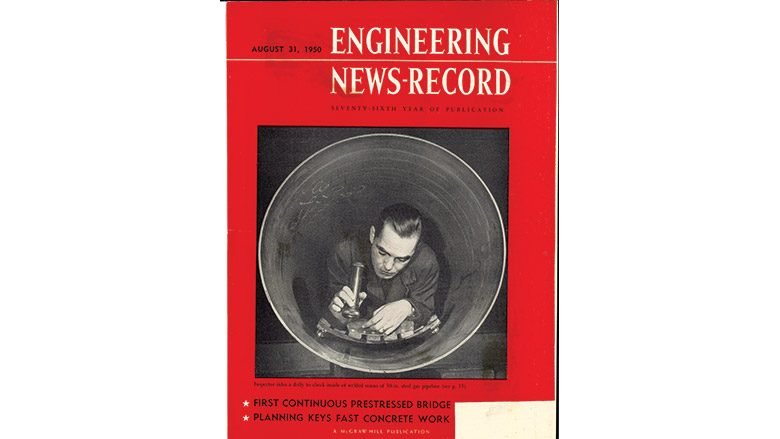

This 1950 image depicts an inspector setting up a cart to check welds inside a 30-inch diameter natural gas pipeline.
The related article was an overview of the pipeline construction boom that saw the nation’s pipeline network stretch from the Gulf Coast to the East and West Coasts.
It included an overview of the largest pipeline project under way: 1,840 miles from Texas to New York City, the first major pipeline to deliver gas to the city.
The general contractor employed 75 subcontractors, typically hired to lay 40- to 80-mile stretches of pipe.
Crews cleared the right-of-way, excavated the trench and performed on-site pipe bending. The joint bevels were polished free of corrosion, then lengths of pipe (typically 31.5 feet) were clamped and welded by hand, with X-ray inspections.
A coating band then took welded sections from several hundred to several thousand feet. The team would first use a machine to scrub the corrosion scale off the exterior surface and spray an enamel primer.
A second machine then coated the pipe with heated coal tar and spirally wrapped it in a protective fabric, either fiberglass or asphalt asbestos felt.
Looking for quick answers on construction and engineering topics?
Try Ask ENR, our new intelligent AI search tool.
Ask ENR →
Lateral arm tractors then lowered the pipe into the ditch. For river crossings, weights were attached to the pipe to overcome buoyancy.
Natural gas-fired power plants supplied 13% of the country’s electricity generation in 1950, compared with today’s share of 43%.
